I'm not a very original thinker. None of us really are. We uncover what is true. We see and hear and experience truth and we remember: Aha! Yes! Now I know!
When I write and then preach a sermon, it's really all one sermon; every single one of them. It's all about truth, love, compassion, giving, and being open.
But sometimes it needs to be said in a way that wakes you up. Author Sue Monk Kidd wrote, "The truth will indeed set you free, but first it will shatter the safe, sweet way you live." See, I don't say anything original, but I can quote those who do and report it here for you, dear reader.
So, for the next few blogs I will be quoting some great thoughts, ideas, rants: truths, for your contemplation.
The first is a video of George Carlin being, well, George. But his tune has changed. This is one hell of a rant that I could never get away with but George can, God bless him. He goes a bit far, but one has to, in order to wake those who are comfortably asleep.
Ready?
Who controls America?
Truth, justice, and the American way can no longer be used in the same sentence. Superman will have to find something else (perhaps someone else) to fight for.

Monday, September 18, 2006


Friday, September 01, 2006
Where is God?
A little Sunday humor on a Friday...
A couple had two little boys who were always getting into trouble. Their parents knew that if any mischief occurred in their village, their sons were probably involved. The boys' mother heard that an elder in town had been successful in disciplining children, so she asked if he would speak with her sons. The elder agreed, but asked to see them separately.
So, the mother sent her youngest son first, in the morning. The elder, a huge man with a booming voice, sat the boy down and asked him sternly, "Where is God?" The boy's mouth dropped open, but he made no response. So the elder repeated the question in an even sterner tone, "Where is God!!?" Again the wide-eyed boy made no attempt to answer. The elder raised his voice and bellowed, "WHERE IS GOD!?" The boy screamed and bolted from the room, ran directly home and dove into a closet, slamming the door behind him.
When his older brother found him hiding, he asked,"What happened?" The younger brother, gasping for breath, replied, "We are in BIG trouble this time. God is missing, and they think WE did it!"
Just drop a fifty in the offering plate, and be sure to stay for coffee hour. I'm here every Sunday at 10:00 a.m.
A couple had two little boys who were always getting into trouble. Their parents knew that if any mischief occurred in their village, their sons were probably involved. The boys' mother heard that an elder in town had been successful in disciplining children, so she asked if he would speak with her sons. The elder agreed, but asked to see them separately.
So, the mother sent her youngest son first, in the morning. The elder, a huge man with a booming voice, sat the boy down and asked him sternly, "Where is God?" The boy's mouth dropped open, but he made no response. So the elder repeated the question in an even sterner tone, "Where is God!!?" Again the wide-eyed boy made no attempt to answer. The elder raised his voice and bellowed, "WHERE IS GOD!?" The boy screamed and bolted from the room, ran directly home and dove into a closet, slamming the door behind him.
When his older brother found him hiding, he asked,"What happened?" The younger brother, gasping for breath, replied, "We are in BIG trouble this time. God is missing, and they think WE did it!"
Just drop a fifty in the offering plate, and be sure to stay for coffee hour. I'm here every Sunday at 10:00 a.m.
Monday, August 28, 2006
Sacred Space
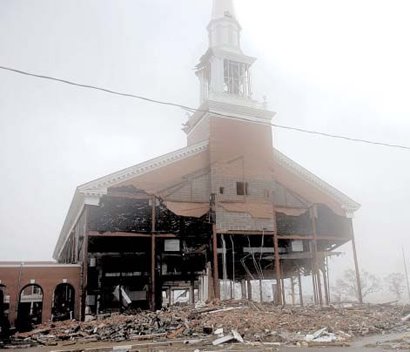
1 Kings 8: 1, 6, 10-11, 22-30, 41-43; Eph. 6: 10-20
*********** Congregational Church
August 27, 2006
In the Celtic spiritual tradition, pilgrims often drew a circle around themselves before embarking on a journey. The pilgrim would point her finger outward and rotate in a clockwise direction until she completed the circle. This practice of faith, the “caim” or “encircling”, reminded the traveler that God surrounds him wherever he goes. Despite the danger that threatens personal safety, the “cosmic powers of this present darkness”, or any antagonists of the faith, the pilgrim is constantly within the circle of God’s protection, the everlasting circle of divine love.
Circle me, Lord. Keep protection near and danger afar.
*********** Congregational Church
August 27, 2006
In the Celtic spiritual tradition, pilgrims often drew a circle around themselves before embarking on a journey. The pilgrim would point her finger outward and rotate in a clockwise direction until she completed the circle. This practice of faith, the “caim” or “encircling”, reminded the traveler that God surrounds him wherever he goes. Despite the danger that threatens personal safety, the “cosmic powers of this present darkness”, or any antagonists of the faith, the pilgrim is constantly within the circle of God’s protection, the everlasting circle of divine love.
Circle me, Lord. Keep protection near and danger afar.
Circle me, Lord. Keep light near and darkness afar.
Circle me, Lord. Keep peace within. Keep evil out.
Circle me, Lord. Keep hope within. Keep doubt without.
But can God’s presence, God’s love be contained in a circle around us? Just as Solomon acknowledged that even heaven and the highest heaven could not contain the Creator of the universe, much less the temple, the house of God that Solomon had built, we recognize that in this ritual it is we who are contained in God’s limitless presence and power.
What makes a space sacred space? What makes this church building a sacred space? Were the lumber and nails and bricks and mortar blessed by prayer? Is it because of the floor plan, the placement of pews and pulpit and lectern? What made the temple in Jerusalem a sacred space? Was it the presence of the Ark of the Covenant? Was it the priests and their presiding over the sacrifices and burnt offerings?
Imagine what it would be like for your congregation if you no longer had a sanctuary in which to worship or around which to center your lives. Imagine living separate from one another, from your sisters and brothers in covenant and feeling separated from God. This coming Tuesday will be the one year anniversary of Hurricane Katrina and those that followed. So many churches were damaged or destroyed. Many church members were forced out of their homes or moved away. Some died. Pastors and church staff members are still ministering while under heavy burdens of recovery themselves. Worship space and practices have had to take different forms in order for congregations to remain viable. What we think of as sacred space may be out of place with our brothers and sisters on the Gulf coast. If there wasn’t a church building for a church, what then would define sacred space?
At the church where I am a member, we refer to the place where we worship as the ‘meetinghouse’ instead of ‘sanctuary’. It goes back to our Puritan mothers and fathers, who stripped the worship space of all adornment and symbols. It is not the cross or the Bible or stained glass that makes this place holy. These and others are reminders of the divine presence. It is what we do in this space that makes it sacred. God’s presence is very real and palpable when we express that presence in our worship and in our life together.
One of my favorite church songs as a child (and still is) is the song “I Am the Church” by Avery and Marsh. If you know it, sing it along with me:
I am the Church/You are the Church/We are the Church together!
All who follow Jesus/All around the world/Yes, we’re the Church together!
The Church is not a building/The Church is not a steeple/
The Church is not a resting place/The Church is the people!
Yes, we are the Church: you, me, everybody! And not just the people we like and agree with, but the people we don’t like and disagree with; they are the church too. And those who have yet to be welcomed, those who are on their way here, they are the Church too. It is what we do in God’s name that makes a space sacred; it is we the Church, the people, who create sacred space wherever we are.
A few years ago Tony Campolo, an American Baptist minister and author, flew to Hawaii to speak at a conference. He checked into his hotel and tried to get some sleep. Unfortunately, his internal clock woke him at 3:00 a.m. The night was dark, the streets were silent, the world was asleep, but Tony was wide awake and his stomach was growling.
I am the Church/You are the Church/We are the Church together!
All who follow Jesus/All around the world/Yes, we’re the Church together!
The Church is not a building/The Church is not a steeple/
The Church is not a resting place/The Church is the people!
Yes, we are the Church: you, me, everybody! And not just the people we like and agree with, but the people we don’t like and disagree with; they are the church too. And those who have yet to be welcomed, those who are on their way here, they are the Church too. It is what we do in God’s name that makes a space sacred; it is we the Church, the people, who create sacred space wherever we are.
A few years ago Tony Campolo, an American Baptist minister and author, flew to Hawaii to speak at a conference. He checked into his hotel and tried to get some sleep. Unfortunately, his internal clock woke him at 3:00 a.m. The night was dark, the streets were silent, the world was asleep, but Tony was wide awake and his stomach was growling.
He got up and prowled the streets looking for a place to get some bacon and eggs for an early breakfast. Everything was closed except for a grungy dive in an alley. He went in and sat down at the counter. The guy behind the counter came over and asked, "What d'ya want?"
Well, Tony wasn't so hungry anymore, so eying some donuts under a plastic cover he said, "I'll have a donut and black coffee."
As he sat there munching on his donut and sipping his coffee at 3:30, in walk eight or nine provocative, loud prostitutes just finished with their night's work. They plopped down at the counter and Tony found himself uncomfortably surrounded by this group of smoking, swearing hookers. He gulped his coffee, planning to make a quick getaway. Then the woman next to him said to her friend, "You know what? Tomorrow's my birthday. I'm gonna be 39." To which her friend nastily replied, "So what d'ya want from me? A birthday party? Huh? You want me to get a cake and sing happy birthday to you?"
The first woman said, "Aw, come on, why do you have to be so mean? Why do you have to put me down? I'm just sayin' it's my birthday. I don't want anything from you. I mean, why should I have a birthday party? I've never had a birthday party in my whole life. Why should I have one now?"
Well, when Tony Campolo heard that, he said he made a decision. He sat and waited until the women left, and then he asked the guy at the counter, "Do they come in here every night?"
"Yeah," he answered.
"The one right next to me," he asked, "she comes in every night?"
"Yeah," he said, "that's Agnes. Yeah, she's here every night. She's been comin' here for years. Why do you want to know?"
"Because she just said that tomorrow is her birthday. What do you think? Do you think we could maybe throw a little birthday party for her right here in the diner?"
A cute kind of smile crept over the man's chubby cheeks. "That's great," he said, "yeah, that's great. I like it." He turned to the kitchen and shouted to his wife, "Hey, come on out here. This guy's got a great idea. Tomorrow is Agnes' birthday and he wants to throw a party for her right here."
His wife came out. "That's terrific," she said. "You know, Agnes is really nice. She's always trying to help other people and nobody does anything nice for her."
So they made their plans. Tony said he'd be back at 2:30 the next morning with some decorations and the man, whose name turns out to be Harry, said he'd make a cake.
At 2:30 the next morning, Tony was back. He had crepe paper and other decorations and a sign made of big pieces of cardboard that said, "Happy Birthday, Agnes!" They decorated the place from one end to the other and got it looking great. Harry had gotten the word out on the streets about the party and by 3:15 it seemed that every prostitute in Honolulu was in the place. There were hookers wall to wall.
At 3:30 on the dot, the door swung open and in walked Agnes and her friend. Tony had everybody ready. They all shouted and screamed "Happy Birthday, Agnes!" Agnes was absolutely flabbergasted. She was stunned, her mouth fell open, her knees started to buckle, and she almost fell over.
And when the birthday cake with all the candles was carried out, that's when she totally lost it. Then she was sobbing and crying. Harry, who wasn’t used to seeing a prostitute cry, gruffly mumbled, "Blow out the candles, Agnes. Cut the cake."
So she pulled herself together and blew them out. Everyone cheered and yelled, "Cut the cake, Agnes, cut the cake!"
But Agnes looked down at the cake and, without taking her eyes off it, slowly and softly said, "Look, Harry, is it all right with you if...I mean, if I don't...I mean, what I want to ask, is it OK if I keep the cake a little while? Is it all right if we don't eat it right away?"
Harry didn’t know what to say so he shrugged and said, "Sure, if that's what you want to do. Keep the cake. Take it home if you want."
"Oh, could I?" she asked. Looking at Tony she said, "I live just down the street a couple of doors; I want to take the cake home, is that okay? I'll be right back, honest."
She got off her stool, picked up the cake, and carried it high in front of her like it was the Holy Grail. Everybody watched in stunned silence and when the door closed behind her, nobody seemed to know what to do. They looked at each other. They looked at Tony.
So Tony got up on a chair and said, "What do you say that we pray together?"
And there they were in a hole-in-the-wall greasy spoon, half the prostitutes in Honolulu, at 3:30 a.m. listening to Tony Campolo as he prayed for Agnes, for her life, her health, and her life with God. Tony recalled, "I prayed that her life would be changed, and that God would be good to her."
When he was finished, Harry leaned over, and with a trace of hostility in his voice, he said, "Hey, you never told me you was a preacher. What kind of church do you belong to anyway?"
In one of those moments when just the right words came, Tony answered him quietly, "I belong to a church that throws birthday parties for prostitutes at 3:30 in the morning."
Harry thought for a moment and said, "No you don't. There ain't no church like that. If there was, I'd join it. Yep, I'd join a church like that."
Space is made sacred by what we do in it. When we celebrate, when we pray, when we give and forgive, when we open our hearts and our doors with love, when we offer an extravagant welcome to any and to all, when we feed the poor, when we share in the Lord’s Supper, when we join in song, when together we put on that whole armor of God, when we stand against the rulers, the authorities, when we name the cosmic powers of this present darkness, when we proclaim Christ’s gospel of peace by living peaceably in the world, when we believe when belief seems foolish, when we take risks for the sake of furthering Christ’s message of love and compassion; when we do all this and more, we are the Church, we become the sacred space.
We still suffer under the illusion that we are a group comprised of individuals. But as a Church, as a Body of Christ, we are no more an individual than a hand or a foot. What Tony Campolo did in that dive in Honolulu, he did as part of the Church, as a servant of Christ, not as an individual. And he invited others to join him in showing God’s love for those whom most forget, ignore, or disdain.
He drew God’s circle of grace and love not only around Agnes but around everyone at that party, turning a greasy spoon into a place of prayer, redemption, and witness. Wherever we are, we are the Church in the world, making every space sacred when we draw others into God’s circle of love and grace.
What makes this space, this church, sacred? How have you been called forth from this place to be the Church in the world? What strides have you made to draw others, even those considered foreigners and strangers, into God’s circle of grace and love? What does it mean to you to gather in worship and prayer each week? How does this sacred space, this tangible reminder of God’s presence, inspire you to give?
(Invite everyone to stand as they are able.)
I invite you all to join now in this ‘encircling’, to point your finger in front of you and to draw a circle around yourselves. Imagine that the circle does not end at the tip of your finger but is limitless and extends far beyond the walls of this church, even beyond the horizon, the boundaries of our nation, across fences and border patrols and oceans and wars and poverty and disease and famine and even death, that all this earth and all its inhabitants are sacred space, contained in God’s limitless presence and power through Jesus Christ. Let this be our prayer without ceasing. Let this be the redemption of the world. Let this be our witness. Amen.
Wednesday, August 23, 2006
Summer jobs
It is a beautiful summer Cape Cod day: warm sun on my skin, warm sand between my toes, the girls playing in the water with my husband, and I am reading a good book (Galileo's Daughter by Dava Sorbel). Suddenly my reverie is jangled by the loud jingling of bells. Bells? Jingling in August?! I whirl around to see a young man running through the sun-drenched crowd of umbrellas and sunbathers, shaking with all his might a board with four bells attached to it. He yells, "I've gotcha lemonade, ice cream, come and get it!" like a barker at Fenway. Children start running after him as though he were the Pied Piper of Hamlin himself. They chase him around the whole beach, even as he runs headlong toward the water. He charges in, bells and all, leaps into the air, flips his body into a somersault and lands in the waves. After retrieving his bells, he commences to clanging them again, the kids chasing him now all the way to the ice cream truck parked at the edge of the beach.
And I think to myself, "Boy, has he got bells to do that!"
What a great way to liven up a summer job. It must be hard work driving an ice cream truck up and down the same beaches, pandering oneself to tourists and chowdah heads who come to soak up the sun and clog up route 28 on a regular basis. So instead of just ringing the bell on his truck in the parking lot, he goes to where his clientele hang out, grabs their attention, performs a cheap but effective stunt, and nails some business, cooling off from the heat of the day in the process. He takes a job with a high potential for boredom and injects a little play into it. Brilliant.
Most summer jobs have a high potential for boredom, unless you're extremely lucky. Even the most fun jobs have their nose-grinding days. Nearly all my summer jobs required a workout of my imagination. One summer I worked as an order picker in a warehouse at WearGuard, a work-clothes company. In 80 degree + heat I pulled a four-shelf, 6.5' high cart from one end of the warehouse to the other, filling orders and putting items into the buckets on the cart as quickly as I could so as to earn bonus money. I did this every weekday, from 7:30 a.m. - 3:30 p.m., for three months the summer I turned 21.
One day I discovered that the warehouse had great acoustics, especially for whistling. I started with the theme song to Andy Griffith's old show; you know the tune I'm talking about. It carried clear across the huge floor. Others started to pick it up. One person would start, another would continue, until we were all joining in and laughing. Then we moved onto Gilligan's Island, I Dream of Jeannie, Bewitched, and the like.
Two summers I worked in the accounts payable department of Medi Mart in downtown Quincy, MA, which was bought out by Walgreens. This was a definite nose job but the pay was decent, hence the two summers. Even so, I managed to survive in two ways: I went outside to eat my lunch whenever possible and I met friends on Fridays to go out dancing and let loose. There wasn't any wiggle room to 'inject play': my boss was a huge man with a British accent named Arthur Noone. Just say his name with the accent in a monotone; that's how he answered the phone. You just knew you couldn't fool around--at all.
Then there was my high school job at a Super Stop & Shop, the very first one of its kind. I started out bagging groceries (I'm still faster than anyone that works at the local Big Y), then got trained as a cashier. Shifts were 3 hours with a 15 minute break or 6 hours on a Saturday with a 30 minute break. What made that job bearable were the people who worked there; well, a select few anyway. I also got to see my first streaker during the summer I worked there; also my second, but alas, last streaker. And there were so many young people working there that we organized a few dances--one for Valentine's Day and another because we had such a good time at the first one.
What makes a summer job tolerable is that you know it's going to end eventually. But a summer job is also a slice of learning of what we need to know to make it over the long haul. We need imagination. We need to find good people. We may need to inject some play into the task at hand, and then let loose on Friday in such a way that doesn't interfere with Saturday and Sunday.
Think of your worst summer job--how did you get through it? How might that help you get through those days with a high potential for boredom? Maybe the seven dwarfs were right after all.
And I think to myself, "Boy, has he got bells to do that!"
What a great way to liven up a summer job. It must be hard work driving an ice cream truck up and down the same beaches, pandering oneself to tourists and chowdah heads who come to soak up the sun and clog up route 28 on a regular basis. So instead of just ringing the bell on his truck in the parking lot, he goes to where his clientele hang out, grabs their attention, performs a cheap but effective stunt, and nails some business, cooling off from the heat of the day in the process. He takes a job with a high potential for boredom and injects a little play into it. Brilliant.
Most summer jobs have a high potential for boredom, unless you're extremely lucky. Even the most fun jobs have their nose-grinding days. Nearly all my summer jobs required a workout of my imagination. One summer I worked as an order picker in a warehouse at WearGuard, a work-clothes company. In 80 degree + heat I pulled a four-shelf, 6.5' high cart from one end of the warehouse to the other, filling orders and putting items into the buckets on the cart as quickly as I could so as to earn bonus money. I did this every weekday, from 7:30 a.m. - 3:30 p.m., for three months the summer I turned 21.
One day I discovered that the warehouse had great acoustics, especially for whistling. I started with the theme song to Andy Griffith's old show; you know the tune I'm talking about. It carried clear across the huge floor. Others started to pick it up. One person would start, another would continue, until we were all joining in and laughing. Then we moved onto Gilligan's Island, I Dream of Jeannie, Bewitched, and the like.
Two summers I worked in the accounts payable department of Medi Mart in downtown Quincy, MA, which was bought out by Walgreens. This was a definite nose job but the pay was decent, hence the two summers. Even so, I managed to survive in two ways: I went outside to eat my lunch whenever possible and I met friends on Fridays to go out dancing and let loose. There wasn't any wiggle room to 'inject play': my boss was a huge man with a British accent named Arthur Noone. Just say his name with the accent in a monotone; that's how he answered the phone. You just knew you couldn't fool around--at all.
Then there was my high school job at a Super Stop & Shop, the very first one of its kind. I started out bagging groceries (I'm still faster than anyone that works at the local Big Y), then got trained as a cashier. Shifts were 3 hours with a 15 minute break or 6 hours on a Saturday with a 30 minute break. What made that job bearable were the people who worked there; well, a select few anyway. I also got to see my first streaker during the summer I worked there; also my second, but alas, last streaker. And there were so many young people working there that we organized a few dances--one for Valentine's Day and another because we had such a good time at the first one.
What makes a summer job tolerable is that you know it's going to end eventually. But a summer job is also a slice of learning of what we need to know to make it over the long haul. We need imagination. We need to find good people. We may need to inject some play into the task at hand, and then let loose on Friday in such a way that doesn't interfere with Saturday and Sunday.
Think of your worst summer job--how did you get through it? How might that help you get through those days with a high potential for boredom? Maybe the seven dwarfs were right after all.
Friday, August 04, 2006
Chowdah Heads
It's time for our annual trek to S. Yarmouth, Cape Cod, MA. This will be our 10th year making the four-hour sojourn (that's without traffic) from Connecticut, so here is some of what my husband and I have learned in bringing small children/now young girls on vacation with my mother and her significant other, David.
Plan to stop along the way. Four hours is just way to long for two kids, let alone two adults, to sit next to each other without driving each other nuts. Our favorite place is Seekonk, MA. Why? It's the first exit over the MA state line: Massachusetts has cheaper gas than Connecticut and there's a Friendly's right down the road.
Plan to stop on the way home too. On the way home we take an hour or two and stop at the children's museum in Providence, RI. The kids get to blow off some steam and the adults get to relax a trifle. Because we're members of our local aquarium, we get in free as well.
Staying with your parents is a good thing. Our daughters get to visit with their Nana, my husband and I get to have a night out with each other, and the price is right. David owns four small cottages. He and my mother use one exclusively and we rent another for $100 for the week.
Go to Cuffy's. Every year we go to their outlet store to buy last year's t-shirts as part of their back-to-school clothes. Plus, they have activities for kids while the parents shop and animatronic displays that play oldies and beach songs.
Just go to the beach. Don't plan to drive here and there seeing things. Traffic on Rt. 28 is miserable and slow. Maybe a round of mini-golf on a cloudy day or a movie on a rainy day but all you're going to do is just go to the beach: build a sandcastle; fly a kite; take a walk; swim in the waves. Having said that, there are a few other things to do...
Have a rainy-day plan. If it does rain, sitting in the cottage watching TV can get old too fast. Know where the movie theater is, the local library, a children's museum, or the aquarium in Wood's Hole. Get a free Cape Cod guide at a grocery store and do the research.
Go to Captain Parker's in Yarmouth for lunch. Great seafood, especially their lobster salad roll.
Ride the Cape Cod Railway. It's not cheap but it's worth the ride.
Bring your bikes. There is a great bike trail that goes from Dennis to Brewster.
Attend a local concert. Many of the towns have a summer concert series where you can bring a picnic dinner. We like the concert series at Wellfleet United Church of Christ. Last year we saw the Highland Light Scottish Pipe Band with Celtic Dancers; this year, the Outer Cape Chorale.
And my own personal favorite...
Celebrate your birthday while you're there. Every year, for the past nine, I have celebrated my birthday by going out for breakfast at some local place with my family. Besides, it feels like a birthday week as well as a vacation.
I love Cape Cod, but more importantly, so do my girls.
Be back in a week.
Plan to stop along the way. Four hours is just way to long for two kids, let alone two adults, to sit next to each other without driving each other nuts. Our favorite place is Seekonk, MA. Why? It's the first exit over the MA state line: Massachusetts has cheaper gas than Connecticut and there's a Friendly's right down the road.
Plan to stop on the way home too. On the way home we take an hour or two and stop at the children's museum in Providence, RI. The kids get to blow off some steam and the adults get to relax a trifle. Because we're members of our local aquarium, we get in free as well.
Staying with your parents is a good thing. Our daughters get to visit with their Nana, my husband and I get to have a night out with each other, and the price is right. David owns four small cottages. He and my mother use one exclusively and we rent another for $100 for the week.
Go to Cuffy's. Every year we go to their outlet store to buy last year's t-shirts as part of their back-to-school clothes. Plus, they have activities for kids while the parents shop and animatronic displays that play oldies and beach songs.
Just go to the beach. Don't plan to drive here and there seeing things. Traffic on Rt. 28 is miserable and slow. Maybe a round of mini-golf on a cloudy day or a movie on a rainy day but all you're going to do is just go to the beach: build a sandcastle; fly a kite; take a walk; swim in the waves. Having said that, there are a few other things to do...
Have a rainy-day plan. If it does rain, sitting in the cottage watching TV can get old too fast. Know where the movie theater is, the local library, a children's museum, or the aquarium in Wood's Hole. Get a free Cape Cod guide at a grocery store and do the research.
Go to Captain Parker's in Yarmouth for lunch. Great seafood, especially their lobster salad roll.
Ride the Cape Cod Railway. It's not cheap but it's worth the ride.
Bring your bikes. There is a great bike trail that goes from Dennis to Brewster.
Attend a local concert. Many of the towns have a summer concert series where you can bring a picnic dinner. We like the concert series at Wellfleet United Church of Christ. Last year we saw the Highland Light Scottish Pipe Band with Celtic Dancers; this year, the Outer Cape Chorale.
And my own personal favorite...
Celebrate your birthday while you're there. Every year, for the past nine, I have celebrated my birthday by going out for breakfast at some local place with my family. Besides, it feels like a birthday week as well as a vacation.
I love Cape Cod, but more importantly, so do my girls.
Be back in a week.
Sunday, July 23, 2006
God's Place
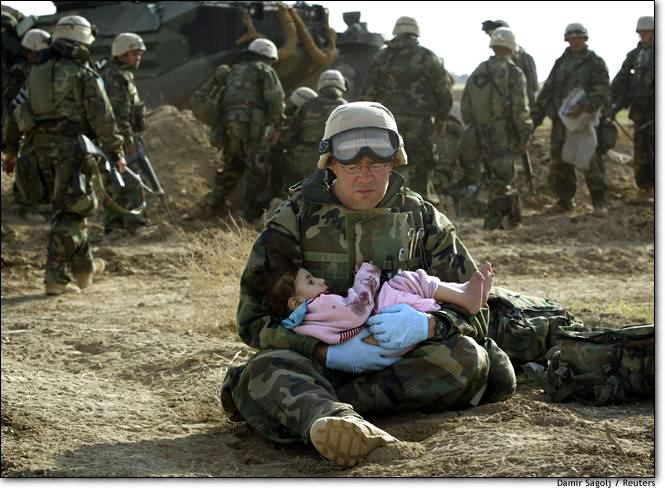
2 Samuel 7: 1-14a; Mark 6: 30-34, 53-56; Ephesians 2: 11-22
given at a United Church of Christ in southern Fairfield County, CT
July 23, 2006
Last week on a PBS station I watched a program that explained string theory in such a way that even I could understand it. It is yet another extraordinary attempt, in a long line of many, to explain the universe in one unified theory. The narrator began by talking about the four known dimensions: length, width, height, and time. String theory is about the fifth dimension and the possibility of other dimensions. The fifth dimension is thought to be an electromagnetic field or force, a texture running through the tapestry of the other four dimensions. The trouble is there are five different string theories; how do we know which one is true? Also, if there are five ways of conceiving a deeper reality, then there are probably more.
Even though I love to read and hear about the new physics, how poetic and sublime it can be, it still sounds like the same business that King David is attempting in 2 Samuel: trying to put the ineffable in a box. David, once a nomadic shepherd, then a warrior, is now settled in a fine house of cedar while the Ark of the Covenant, thought to be the very real Presence of God, resides in a tent. The prophet Nathan gives God’s blessing to David’s endeavor without first consulting the Almighty. What ensues sounds almost like a prelude to the Book of Job, when God spoke in the whirlwind, asking Job just where was he when God created the heavens and the earth: “Are you the one to build me a house to live in? I have not lived in a house since the day I brought up the people of Israel from Egypt to this day, but I have moving about in a tent and a tabernacle.” God then goes on to make promises, everlasting ones, to King David, thus also, to the people of Israel.
But then God declares: “…the Lord will make you a house”. This house is not made of cedar but of descendants, a dynasty, created of flesh and blood, and through them God will establish a kingdom that “…shall be made sure forever…” (v. 16). The house that God would build does not have walls but persons who would serve God and God’s purpose, which cannot be contained by a ruler or nation, or for that matter, Church, denomination, or other entity.
Imagine you are one outside the Church, looking in. You would see differences in structure, organization, worship practices, role of clergy and laypeople, and so on. How would you know which one is the closest to the truth? Usually when ‘church shopping’, persons find one that is comfortable to them.
J.B. Phillips, in his pithy book Your God is Too Small, writes that the most disturbing thing about churches to the outsider is “the spirit of ‘churchiness’ which seems to pervade them all. They all seem to [one outside] to have captured and tamed and trained to their own liking Something that is really far too big ever to be forced into little man-made boxes with neat labels upon them. … ‘If there’s a God at all,’ [the one outside] feels… ‘then [God’s] here in the home and in the street, here in the pub and in the workshop. And if it’s true that [God’s] interested in me and wants me to love and serve Him, then He’s available for me and [everyone else]… If God is God, God’s big, and generous and magnificent…”, unable to be put into any kind of box or label.
If we are looking for God and God’s work of love through Christ Jesus and the Holy Spirit, then we also need to allow our church, our community, to be uncomfortable; a church that doesn’t always have all the answers but is willing to wrestle with the questions; a church that acknowledges a God who challenges us as much as comforts us; a God who dies and lives again as well as lives; a God who is unpredictable as well as the same yesterday, today and tomorrow; a God who is poor and homeless, with dusty feet and one set of clothing but rich in compassion.
When we look at Jesus the Christ we see where God’s place is. In the gospel reading from Mark, Jesus and his disciples try to get away for a while. The disciples have returned from their mission in two’s of healing the sick and calling for repentance. They have also just heard of the death of John the Baptist. Jesus and his disciples are tired and hungry and he calls them away to a deserted place by boat. But a crowd of people, who had heard what Jesus and his disciples had been doing, recognize them by this and hurry ahead on foot, arriving ahead of them, greeting them as the boat comes ashore to this deserted place. Even though Jesus is tired, he has compassion for them and begins teaching them many things.
When they come to Gennesaret, again people recognize him, not by face, but by his compassion. They come from the whole region, bringing the sick on mats to wherever they heard he was, whether village or city or farm.
God’s place is in the deserted areas, in places where people seek out compassion and guidance. God is where there is suffering, wherever healing is needed. God is in the village, the city, the farm. God is wherever the outsider is; indeed, through Jesus the Christ, God is the outsider, living beyond the system, off the grid. God travels, is on the loose, cannot be pinned down, or as written in the book of Exodus, God will be what God will be.
We take great comfort in knowing that wherever we are, God is; that there is no place we can go, there is no situation we face where God is not. In the 23rd Psalm, the one most favored, most read, we feel at peace when we read the words “Surely goodness and mercy shall follow me all the days of my life, and I shall dwell in the house of the Lord my whole life long.” We cannot escape God’s love and grace. Without a doubt, this is Good News.
Yet the reverse is also true: wherever God is, there we are called to be. This is the flipside of the Good News, the side B that doesn’t get much play. Though we cannot pin God down to any one point of view, to any one political party, to any one side, God calls us to be where God’s people are in need. With God there are no walls to be built, only walls to be torn down. Perhaps we cannot be in Lebanon or Israel, in Iraq or Afghanistan, in Darfur or in Kenya, but we can be where God is with our prayers, with our conscience, with our calls to senators and representatives, with our contributions to Church World Service, Our Church’s Wider Mission, One Great Hour of Sharing, and Neighbors in Need.
We can be where God is when we help those in need in the community and in neighboring towns. We can be where God is when we tell others about our faith and invite them to church. We can be where God is when we welcome strangers in our midst as friends. We can be where God is when we work on a mission trip, when we teach Sunday school, when we serve a hot meal in a soup kitchen, when we hammer nails on a Habitat house. We can be where God is when we work for clean water and nourishing food for all people, good schools, care for the elderly, and health care for everyone. We can be where God is when we recognize and honor the image of God dwelling in every person.
In Paul’s letter to the Ephesians, he speaks of bringing together the circumcised, the Jewish Christians, and the uncircumcised, the Gentile Christians, which was no small feat; not unlike bringing together Palestine and Israel or Iraqi Sunnis and Shiites; not unlike bringing together opposing sides of passionate people dedicated to their point of view. Through Christ the walls of hostility are brought down and all are reconciled to God, creating a new humanity in place of the two, thus making peace.
God is peace; therefore, God’s place is where there is war, violence, discord, and strife. God is justice; therefore, God’s place is where there is poverty, hunger, oppression, hatred, discrimination, and abuse of power. God is love; therefore, God’s place is where there is fear, for love casts out fear. And where God is, we are meant to follow.
Our God is on the move, thus the Church, the people of God, needs to be on the move as well. The Church is the Holy Spirit moving within us; it is the community of faith sent just as much as the community gathered. What walls need to come down in your life together and in your personal life that you and this congregation might be God’s dwelling place in the world? What is the foundation upon which your church is built? How does your congregation make a connection between what happens within the walls of your church and what happens beyond them? Where is God calling this community of faith to give witness to the love and grace of Jesus the Christ?
Thanks be to God that we have been made a house, a dwelling place for God, with hands and feet and hearts and spirits on the move. Thanks be to God for Jesus the Christ, in whom we are a new humanity and reconciled with one another through the cross. Thanks be to God for the Spirit, through whom we have access to God’s power to bring down the walls of hostility, who calls us out of ourselves to be where God is. Amen.
Wednesday, July 19, 2006
Chosen

Psalm 85: 8-13; Ephesians 1: 3-14
First Church of Christ, Cong’l, *******
July 16, 2006
Chosen. What a powerful word. Think about what it means to be chosen. You have been chosen. It feels grand to be chosen, doesn’t it? Well, if it’s something good, yes. Remember back in elementary school, when teams would be chosen for kickball during recess? It felt great to be among the first ones chosen; it was humiliating to be chosen last. You knew what kind of player your friends thought you were based on when you got picked for the team.
There are so many wonderful opportunities to be chosen: a part in the school play or local amateur production, class president, singing the national anthem at a ballgame, graduation speaker, prom date, friendships, relationships, the one who wants to marry us, scholarships, teaching fellowships, awards, job interviews, promotions, college applications and essays, sports and academic teams, a published book or poem. It’s thrilling when we are chosen, when we are needed, accepted, desired, wanted, required. It’s as though our purpose in life has been suddenly illuminated for that brief instant and we think “Wow, me?” or “I’m glad you finally saw the light of day!” We know ourselves to be joined in creating something special, which may not have been the same if we were not a part of it.
There are times we’d like to think that we’re important, that somehow our corner of the world hinges on our participation in it. Then we are chosen for something we’d rather not do and the measure of our importance conveniently shrinks. Sometimes our talents are matched perfectly to the chosen task; often we can be chosen to do something for which we feel wholly unqualified and we wonder just who is in charge.
When we are chosen for something in the church we oftentimes feel the latter: feelings of inadequacy, that we’re not the right person for the job, they should find someone who is more faithful, who knows more about the Bible, who is a better public speaker. We may wonder if God’s hand is really in our being chosen. What can God be thinking, asking us? What plan does God have in mind?
In today’s epistle lesson, Paul tells us that God is thinking about grace and has been doing so since time immemorial. Grace has been the plan all along. God “chose us in Christ before the foundation of the world to be holy and blameless before him in love. He destined us for adoption as his children though Jesus Christ, according to the good pleasure of his will, to the praise of his glorious grace that he freely bestowed on us in the Beloved.” Even though we are made in God’s image, even though we are of God’s creation, we are in need of adoption because we rejected this image, this creation when we sinned against God and chose our own way. God gave humankind free will and we did not choose God and the way of love. But before the foundation of the world, God adopted us, chose us in Christ, even before we had an opportunity to reject God.
Any of us who are parents know what it means to choose our children, to choose that they will be ours, no matter what, long before they are born, whether they are born to us or to their birth parents. We know we will never stop being their parents, come what may.
Recently, a longtime friend of mine, Andy, wrote in his weblog about when he was adopted, or as his parents told him, chosen. He writes, “My mother explained that after the adoption process was complete (a two + year process) my parents were asked to ‘select’ their child. Apparently there were ten babies, all chosen to match up with my parents heritage, who were ‘available for adoption’ and my parents were asked to choose their first child from this group. Now, I was a goofy looking child. I was cross-eyed and had ‘creative’ hair that went wherever it wanted to. I've seen the pictures. Believe me, it's true. Goofy goofy goofy looking child. How they chose me I figured that I would never know. So one anniversary I finally asked my Mom, ‘If I was so silly looking, then how come you chose me?’ And my mother smiled and said, ‘We chose the baby that needed the most love.’” And each year his family would honor (and still does) the day that he and each of his siblings were chosen as well as the day they were born.
But not all adoption stories are so happy like my friend Andy’s. In some cases children do not attach or bond themselves readily to their new parents, no matter how much they are wanted, no matter how much they are sought after. If they are at an older age, they may be afraid that they will be abandoned again. They have difficulty trusting anyone. They believe that they don’t really belong, that they aren’t anyone’s son or daughter. They act out their anger with their parents, their siblings, their teachers, with anyone they might feel tempted to be close to. It can leave parents at their wits end, knowing they have done everything to tell their child that they love them and that they are wanted.
But we can’t give back our children, nor do we really want to. All any parent can do, when their child is in pain, whether adopted or not, is love that child even when they don’t deserve it; especially when they don’t deserve it.
It is this grace that God offers us, each one of us adopted as God’s child, as the apostle Paul puts it. And it is God who does the choosing, not us. We do not choose who is adopted, who is among the chosen; God is the chooser, the ‘decider’. And through the life of Jesus the Christ we see who God chooses: the poor, the outcast, the sinner, the weak, the forgotten, the oppressed, the meek, the peacemakers, those who hunger and thirst for righteousness, those who mourn, those who are pure in heart, the poor in spirit, those who are persecuted for righteousness’ sake. Jesus didn’t hang out with, or make himself out to be one of the insiders, the winners, the eloquent, the brightest, or the star. He traveled with and lived as one of the outsiders, the losers, the plain-spoken, the simple, and the ordinary.
Are we with those whom God chooses in Christ? Are we with those whom this world rejects, yet God chooses? Like the story of the sheep and the goats, about feeding the hungry, visiting the sick and imprisoned, clothing the naked, as if we were serving Christ himself, we all score as goats. Even though we, the apparent insiders, live apart from those whom God chooses in Christ, still God chooses us too. Even so, God chooses us too. Not only chooses us but lavishes on us the riches of God’s grace, forgiving our sins and redeeming our lives, and calling us sons and daughters of grace. In Christ we have also obtained an inheritance…so that we might live for the praise of his glory.
This kind of choosing shows us at once how insignificant and how precious we are. We are chosen not for greatness in the eyes of the world but chosen so that we might live for the praise of Christ’s glory.
Jesus the Christ is called the ‘only begotten son of God’ because he did not turn from God. He did not have to be adopted into God’s family through grace because Jesus was faithful to God and God’s way of love for all people. And it is through this Chosen One, through this particularity, that God reveals infinite grace and chooses us. When we sin, when we choose one kind of person over another; when we choose to live separate from God and God’s love and power to heal, when we behave in such a way as to think we don’t deserve love, it is especially then that God does love us and adopts us, chooses us once more to be children of love and grace.
One of the slogans of the Still Speaking campaign is: No matter who you are or where you are on life’s journey, you are welcome here. We, who have been chosen by God and God’s grace, cannot deny anyone God’s choosing of them in Christ. If you’ve seen either of the ads, both are about how the United Church of Christ doesn’t reject anyone. I’d like to see an ad that shows what it means to be chosen, that illustrates the power of being chosen by God’s grace to transform lives and congregations. There are some who have suffered abandonment from the world, who have been orphaned from their family of faith, yet they desperately want to belong to a community that accepts them as they are, who would adopt them as they are, just as we, who were once orphans, who were not a people, have been adopted into this family of faith and now know ourselves as belonging to God.
In response to being chosen by God, how might we live for the praise of Christ’s glory? In your life together as a family of God, what would bring glory to Christ? Who is missing in the family of faith, the Church universal? Who are the chosen, the adopted children of God’s grace not present, not welcomed? Redemption was God’s plan all along; not just for some but for all. When we come together to worship, our gathering is incomplete. The family is not whole, thus, neither are we. For that reason, we are chosen to be sent into the world, to seek out our adopted sisters and brothers, to extend God’s grace to all people, giving the Good News that we are all children of God, chosen by God before the creation of the world. Amen.
Wednesday, June 28, 2006
Gone astray
It's raining and my kids are driving me crazy: I'm desperate for a laugh, hence, a cartoon.


Monday, June 26, 2006
If one picture is worth a thousand words...
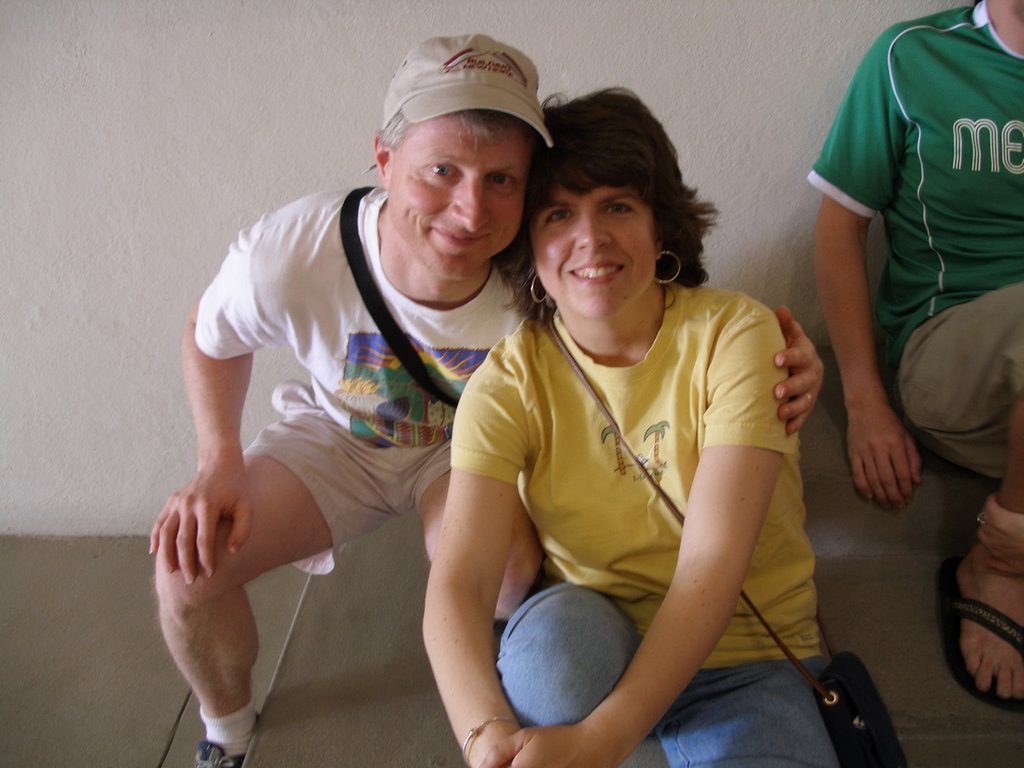
Yesterday was our 12th wedding anniversary. People still call us "honeymooners", in the best sense of the word.

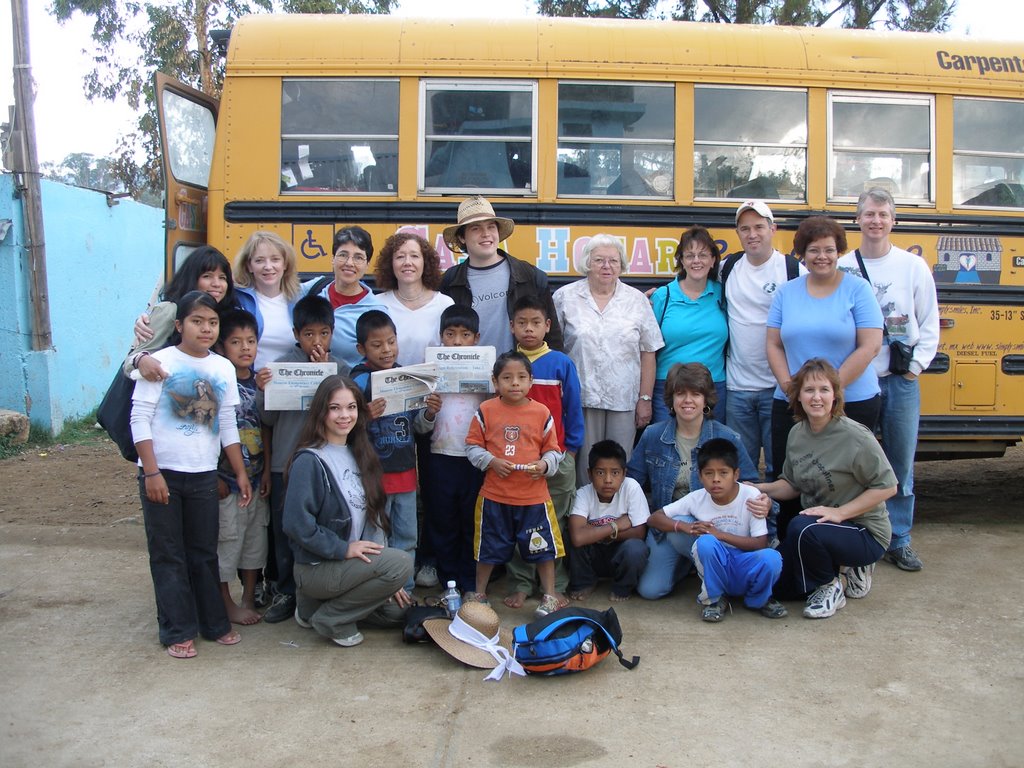
This is the last blog about my trip to Mexico. I figure pictures can say it better than I can. I've put the names of folks from my church but not the children, out of concern for privacy.

Joan.
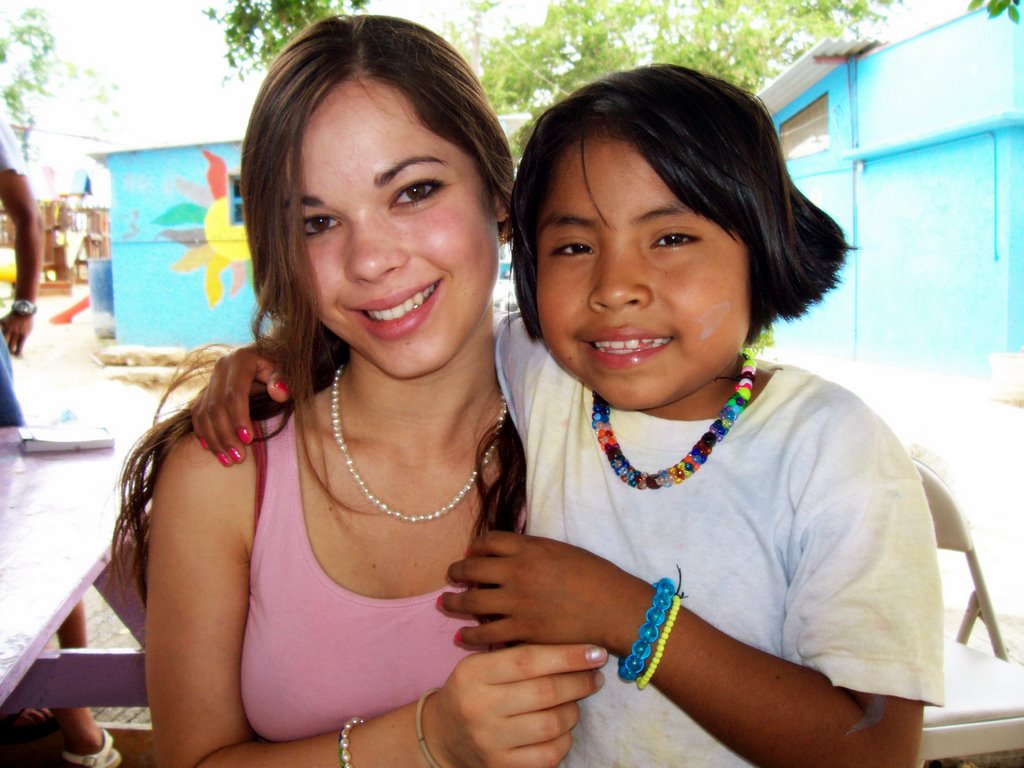
Kristen.
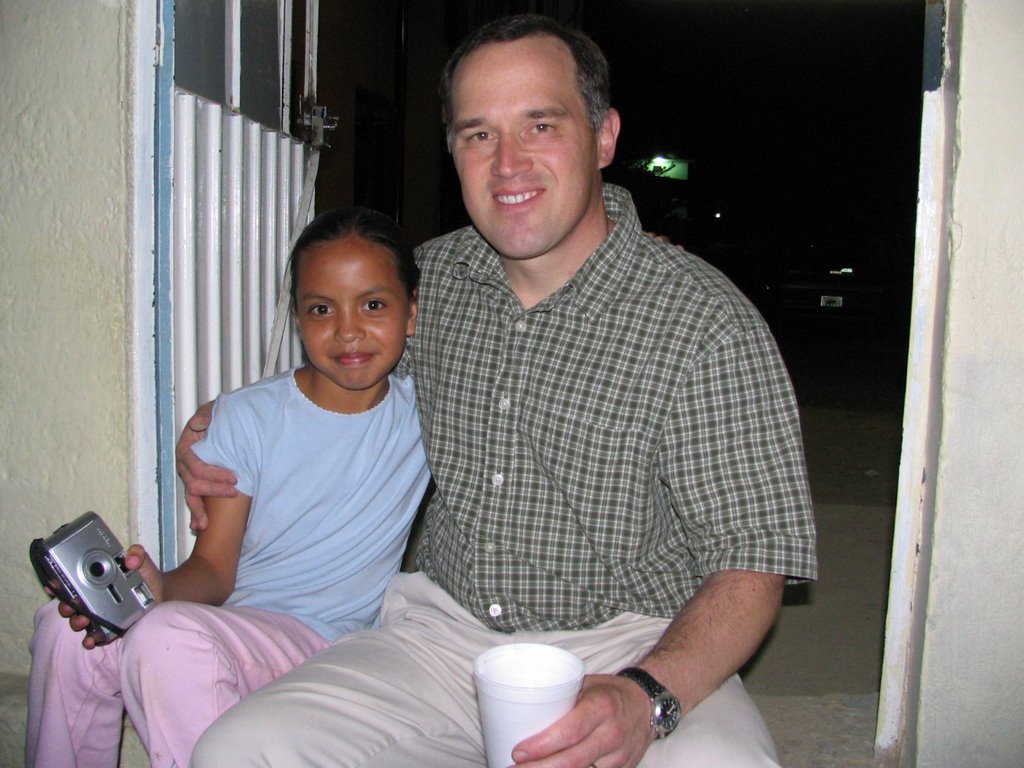
Our pastor, Pete.
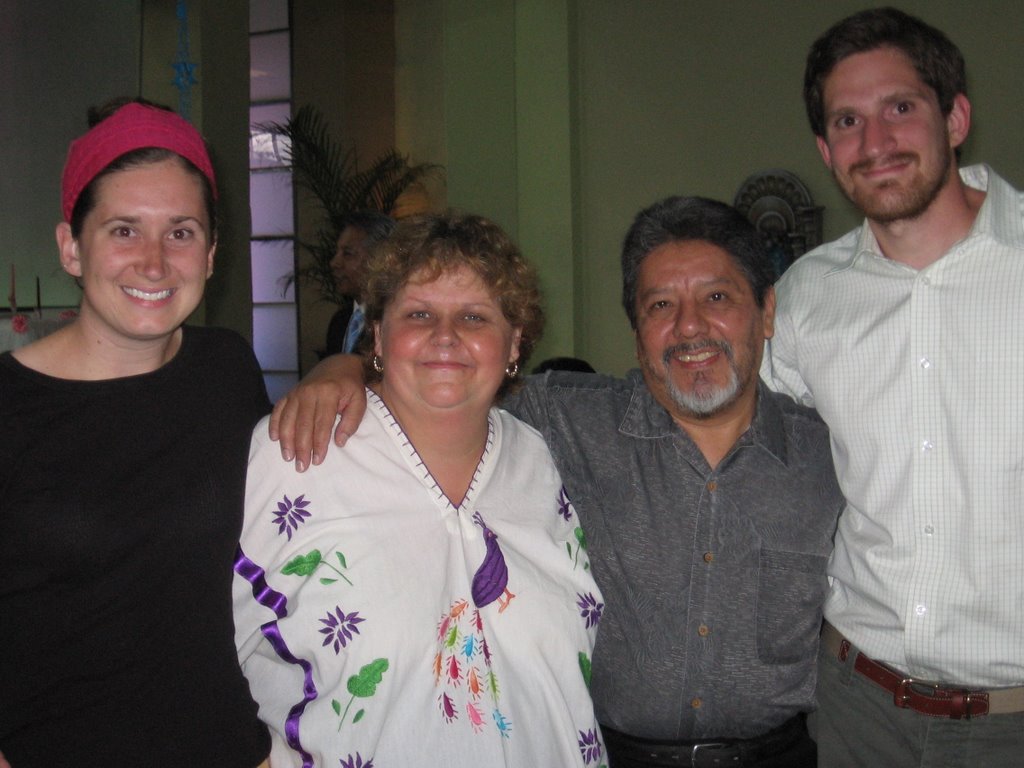
Kristen Graves of Simply Smiles, Carol and Francisco, directors of Casa Hogar, and Bryan Nurnberger, founder of Simply Smiles.



Shirley and Harriet.

Me with weepy eyes from saying 'goodbye'.

Lynn, trip director.

Sheila.
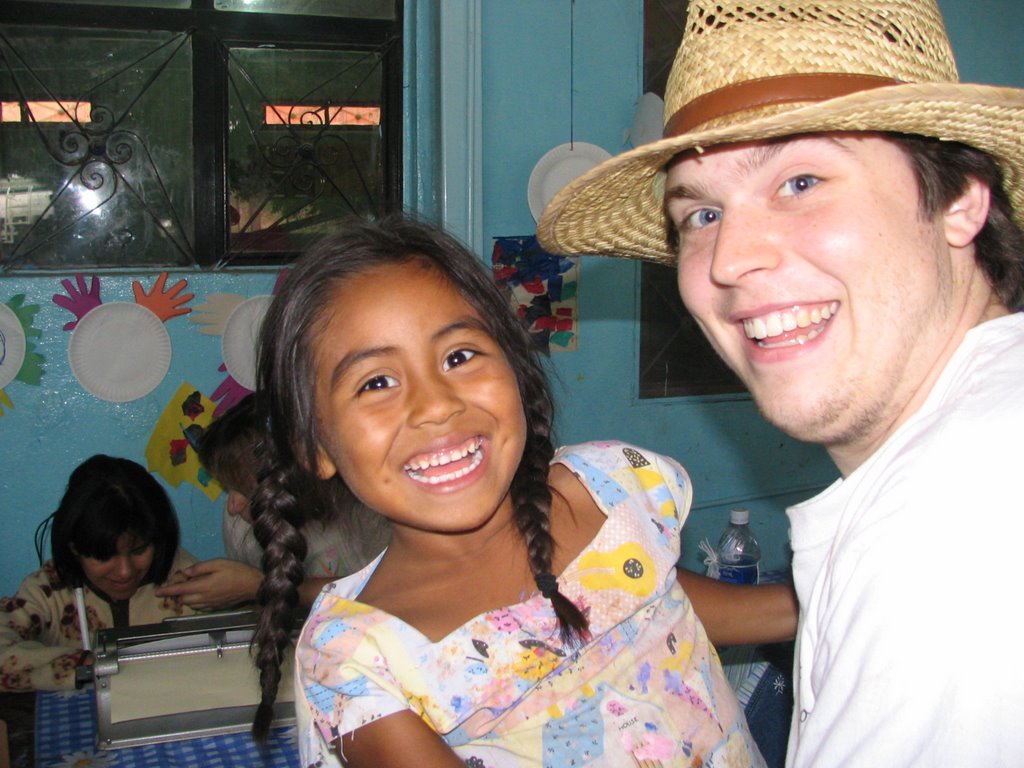
Lucas.

Debbie and Judy.

David.

Cindy.

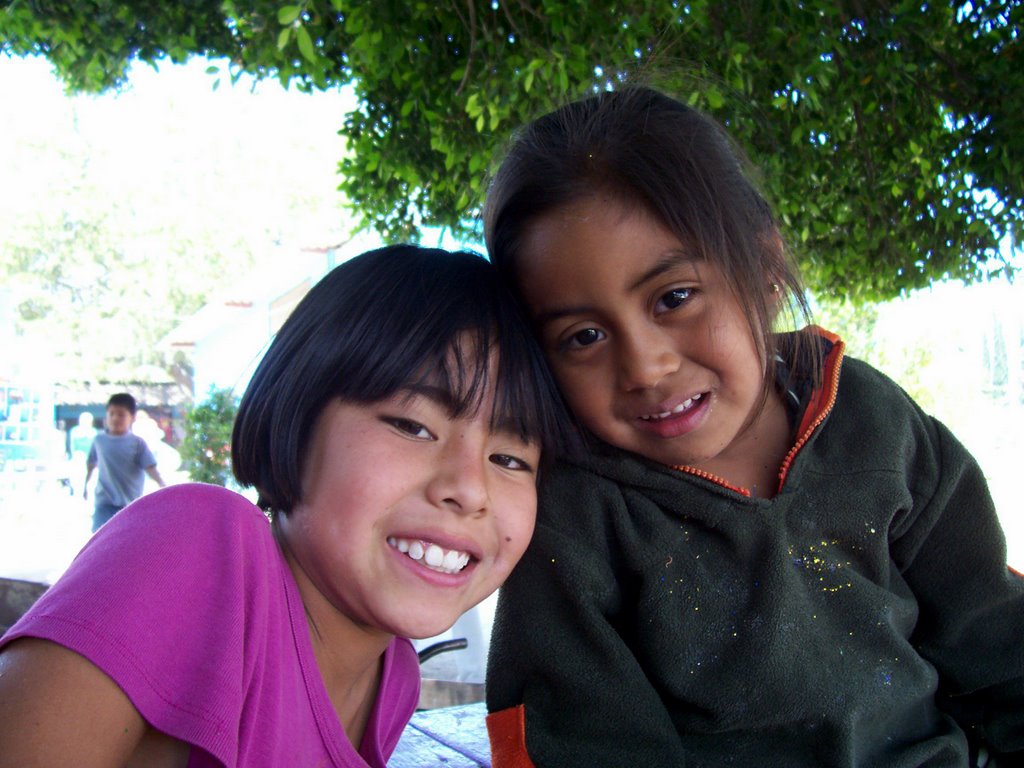
Dios te bendiga, mis amigos. Gracias e adios.
Tuesday, June 13, 2006
Language

On the last leg of our flight to Oaxaca, we were on a regional jet with only one flight attendant. We could tell she was from Texas; she had that twang goin' on. The Houston/Oaxaca flight is a back and forth shuttle; about as common as New York/Washington D.C. but with not as much regularity. About the one thing you can count on is that some folks on that plane will be speaking Spanish as a first, perhaps only, language. So you would think that it would be a job requirement for crew members to speak at least passable Spanish. First, we were all a bit shocked at her pronunciation of Oaxaca ("oh-ah-haa-ka"). Then, when she was handing out sandwiches (turkey or ham), she asked a Spanish-speaking passenger "Paa-vo or haa-mo" which should have been "Pavo o hamon", the "h" remaining silent. This then became the joke of our week, adding more words to this Texas-twang Spanish lexicon: sinko de may-yo, gray-see-as, poor fay-ver, con kay-so. I think it helped us relieve our anxiety about our lack of Spanish as much as it was just plain stupid. Plus, Texas just seems like one big target to most folks.
The very existence of language, spoken or written, is divisive. If you can't speak the language, if you don't know the 'lingo', then you're out. Even if you speak the same ethnic or national language, there's jargon, colloquialisms, culture, slang, dialect, accents, and code words to contend with. In groups we use these as a type of shorthand; a way of defining identity to bolster the group consciousness. Eventually it becomes the language of those who are 'in', and if we are trying to increase group membership, we spend a tremendous amount of time and effort (but not really enough) to indoctrinate the newbies into the glossary of terms.
Take churches, for example. Do you know what a narthex is? Or the chancel? How about acolyte, doxology, scapula, chasuble, polity? It has been recommended that churches stop using words only used in church and choose a common language, one that is spoken outside the church as well as inside, so as to welcome unchurched folks into their midst. Some people resist this because then the church becomes more like an auditorium or concert hall than a church, a sacred place. At the church where I worship, we do not call it a sanctuary but a meetinghouse, which goes back to our Puritan forebears. The space is made holy by what we do there, thus any space, any place can be made holy (or not) by what we do, what language we speak.
Yesterday evening I was watching my 6-yr. old daughter play kickball with the rest of her classmates against another 1st grade class. I noticed the boys knew the language and rules of the game while the girls had to catch on. Of course this made perfect sense; many of these boys play little league and/or go to or watch baseball games with their fathers. I wondered why no one spends enough time teaching girls the same language; after all, baseball is our national pastime. But then it hit me: none of them will grow up to play professional baseball. There's softball available to them, sure, but it's not the multi-billion dollar business that baseball is. I discussed this with my husband as we watched the game; I could hear just the slightest edge of defensiveness in his voice, but perhaps that was a cover for the sorrow over what this meant for his daughters. It's tough for any 'in' group to admit they've kept people out, even if it was unwittingly.
I think there's a time and place for men to have their own language and meanings and for women to have the same, and to be exclusive for a while, to take a break from the Mars/Venus shuttle run. It's when it becomes divisive and systematically exclusive that we then create more distance and the need for a space shuttle just so we can communicate. None of us knows everything; we're all in need of learning, thus gaining the humility we need to teach what we do know.
Whatever language we speak, even if it is the most eloquent, if we do so without love, we all sound like a noisy gong or a clanging cymbal, says the apostle Paul. The move to unify our nation under English is without love. Joking about a working woman's twangy Texan Spanish was without love. Not learning enough Spanish before we left was without love. Some of the most loving moments I lived in during our mission trip and throughout my life are those when hardly a word was spoken. Sometimes, words are just not enough.
Saturday, June 10, 2006
Communion
At some point in our human existence we all have those experiences when something we've learned and studied and believed transfers from our head, pierces our heart, and grabs hold of our gut. The hand of God rests upon our shoulder in such a way as makes us want to wriggle out from under it yet we cannot escape it. This was one of the most powerful.
It was Wednesday, the middle of our trip; it became the pivot upon which our week turned. I spent the morning putting sealant on the concrete dome-shaped computer lab with Cindy, a mom in our group, and some of the kids. After we finished I went into the room where the weekday morning prayer/Bible study led by Francisco, one of the directors, was being held. My Spanish is minimal but his wife Carol, mindful of this, translated for me. It was good just to sit and sing and listen to some songs in Spanish, and meditate in my own way.
When prayers were over, it was time to board the bus for our noontime mission and afternoon excursion. The kids and staff had prepared over 100 ham and cheese sandwiches plus a huge container of punch for us to take to the workers and residents of the Oaxacan city dump. There are 40 or so families who live and work there, culling recyclable plastic bottles from the mountains of garbage. They bundle up the plastic, load it on trucks, and it is then sold to a Mexican mafia who pays them about 400 pesos (40 dollars) for the week's work: 10 pesos (1 dollar) per family. Some of their food they scavenge from their findings. They work from sunrise to sunset, in 80+ heat, surrounded and permeated by the stench of rotting garbage. Imagine some of the worst stuff they could find, and they have found it and probably worse: medical waste, including syringes, dead animals, smells so bad they could be seen escaping from the just-ripped plastic bags.
This work of delivering lunches to these resident workers twice a week is a mission of the orphanage; the children fight over who gets to make the sandwiches and then deliver them to the folks at the dump. Children who are the recipients of mission also get to give to others so they see themselves as having something to give and so to share with others. But this week the children are grounded because of misbehaving, so it is up to our group and a group of college kids that have also been working at Casa Hogar this week to deliver lunch.
We have been told by Bryan (see Simply Smiles) that these people, upon introduction, might offer us their arms instead of their hands because of how dirty and bacteria-ridden they are. He urges us to shake their hands anyway. For Jesus there were no 'untouchables'; only people in need of human connection. We stop on the way to buy a huge sack of oranges to augment the meal. The trip takes about 30 minutes; the dump announces itself in its usual way. We pass by corrugated tin shacks that house these families and others; no running water, no electricity. We pull into a no-longer-used sorting station that gives us and the workers some shade to visit in. They see the bus and come in a few at a time, hestitant at first but then I get a sense of hospitality as they open their home to us.
I help dole out the cold drinks in plastic cups, giving a smile to substitute for a greeting in my crude Spanish. Then we grab the bags of sandwiches and oranges and hand these out. Soon everyone is digging in. I go and sit with a young girl, maybe 5 or 6, and her little sister, who seems to be about 2 or 3. I figure the little one's Spanish is about the same as mine, so I am in good company. She takes her sandwich apart and hands the half with ham to her big sister; she then proceeds to take pieces of the string cheese off the bread and eat them. Like any mother, I suppose, I start to make yummy sounds and rub my tummy as if to say "that must taste good." Instead she interprets my gestures as signs of hunger, peels off a piece of cheese and hands it to me.
Her hands are grimy and so are mine. I hesitate for only a nanosecond; what can I say...no, thank you? I take the cheese in my fingers and put it in my mouth, smiling at her, careful not to let the tears rise. And I think in some small way, she smiled back.
I have had Communion in more ways than I can count. I've had wafers, white bread, wheat, pita, little shortbread squares, and shortcake biscuits; Oreos and milk; crackers and grape jelly; I've had grape juice, red wine, and whatever awful searing stuff Catholics serve. I've been in all kinds of places: cathedrals, churches, camps, mission trips, retreats, the ocean, the mountains, the city, suburbia, rural town, in other countries, even on an airplane. It's been served all kinds of ways: in the pew, at the railing, by intinction (rip and dip, as we said in seminary), in a circle, at a table; in little cups (glass and plastic), on silver and brass plates, glass pitcher and goblet, stoneware, paper plates and cups, on an antique wooden tray with spindles to hold the tiny glass cups in place. I've served, and been served by, all kinds of people: men, women, children, teenagers, priests, ministers, laypeople, even served by a pregnant woman once, which I thought was meaningful on several levels, considering it was a Catholic retreat center.
But it has never meant as much to me as it did that Wednesday afternoon in the Oaxacan city dump, served to me by a little girl with filthy hands and an open heart in a place ridden with decay. Outside of marriage, it was the purest moment of Communion I've ever experienced. God does not waste anything, including people. We may do that to be certain, but through that little girl, God was visible, incarnate, real.
Whenever you do this, remember me, Jesus said. Remember love, remember compassion, remember sacrifice, remember grace and life and forgiveness and justice and peace. And whenever I take communion or serve it, I'll remember her, too.
It was Wednesday, the middle of our trip; it became the pivot upon which our week turned. I spent the morning putting sealant on the concrete dome-shaped computer lab with Cindy, a mom in our group, and some of the kids. After we finished I went into the room where the weekday morning prayer/Bible study led by Francisco, one of the directors, was being held. My Spanish is minimal but his wife Carol, mindful of this, translated for me. It was good just to sit and sing and listen to some songs in Spanish, and meditate in my own way.
When prayers were over, it was time to board the bus for our noontime mission and afternoon excursion. The kids and staff had prepared over 100 ham and cheese sandwiches plus a huge container of punch for us to take to the workers and residents of the Oaxacan city dump. There are 40 or so families who live and work there, culling recyclable plastic bottles from the mountains of garbage. They bundle up the plastic, load it on trucks, and it is then sold to a Mexican mafia who pays them about 400 pesos (40 dollars) for the week's work: 10 pesos (1 dollar) per family. Some of their food they scavenge from their findings. They work from sunrise to sunset, in 80+ heat, surrounded and permeated by the stench of rotting garbage. Imagine some of the worst stuff they could find, and they have found it and probably worse: medical waste, including syringes, dead animals, smells so bad they could be seen escaping from the just-ripped plastic bags.
This work of delivering lunches to these resident workers twice a week is a mission of the orphanage; the children fight over who gets to make the sandwiches and then deliver them to the folks at the dump. Children who are the recipients of mission also get to give to others so they see themselves as having something to give and so to share with others. But this week the children are grounded because of misbehaving, so it is up to our group and a group of college kids that have also been working at Casa Hogar this week to deliver lunch.
We have been told by Bryan (see Simply Smiles) that these people, upon introduction, might offer us their arms instead of their hands because of how dirty and bacteria-ridden they are. He urges us to shake their hands anyway. For Jesus there were no 'untouchables'; only people in need of human connection. We stop on the way to buy a huge sack of oranges to augment the meal. The trip takes about 30 minutes; the dump announces itself in its usual way. We pass by corrugated tin shacks that house these families and others; no running water, no electricity. We pull into a no-longer-used sorting station that gives us and the workers some shade to visit in. They see the bus and come in a few at a time, hestitant at first but then I get a sense of hospitality as they open their home to us.
I help dole out the cold drinks in plastic cups, giving a smile to substitute for a greeting in my crude Spanish. Then we grab the bags of sandwiches and oranges and hand these out. Soon everyone is digging in. I go and sit with a young girl, maybe 5 or 6, and her little sister, who seems to be about 2 or 3. I figure the little one's Spanish is about the same as mine, so I am in good company. She takes her sandwich apart and hands the half with ham to her big sister; she then proceeds to take pieces of the string cheese off the bread and eat them. Like any mother, I suppose, I start to make yummy sounds and rub my tummy as if to say "that must taste good." Instead she interprets my gestures as signs of hunger, peels off a piece of cheese and hands it to me.
Her hands are grimy and so are mine. I hesitate for only a nanosecond; what can I say...no, thank you? I take the cheese in my fingers and put it in my mouth, smiling at her, careful not to let the tears rise. And I think in some small way, she smiled back.
I have had Communion in more ways than I can count. I've had wafers, white bread, wheat, pita, little shortbread squares, and shortcake biscuits; Oreos and milk; crackers and grape jelly; I've had grape juice, red wine, and whatever awful searing stuff Catholics serve. I've been in all kinds of places: cathedrals, churches, camps, mission trips, retreats, the ocean, the mountains, the city, suburbia, rural town, in other countries, even on an airplane. It's been served all kinds of ways: in the pew, at the railing, by intinction (rip and dip, as we said in seminary), in a circle, at a table; in little cups (glass and plastic), on silver and brass plates, glass pitcher and goblet, stoneware, paper plates and cups, on an antique wooden tray with spindles to hold the tiny glass cups in place. I've served, and been served by, all kinds of people: men, women, children, teenagers, priests, ministers, laypeople, even served by a pregnant woman once, which I thought was meaningful on several levels, considering it was a Catholic retreat center.
But it has never meant as much to me as it did that Wednesday afternoon in the Oaxacan city dump, served to me by a little girl with filthy hands and an open heart in a place ridden with decay. Outside of marriage, it was the purest moment of Communion I've ever experienced. God does not waste anything, including people. We may do that to be certain, but through that little girl, God was visible, incarnate, real.
Whenever you do this, remember me, Jesus said. Remember love, remember compassion, remember sacrifice, remember grace and life and forgiveness and justice and peace. And whenever I take communion or serve it, I'll remember her, too.
Wednesday, May 31, 2006
Down in Mexico
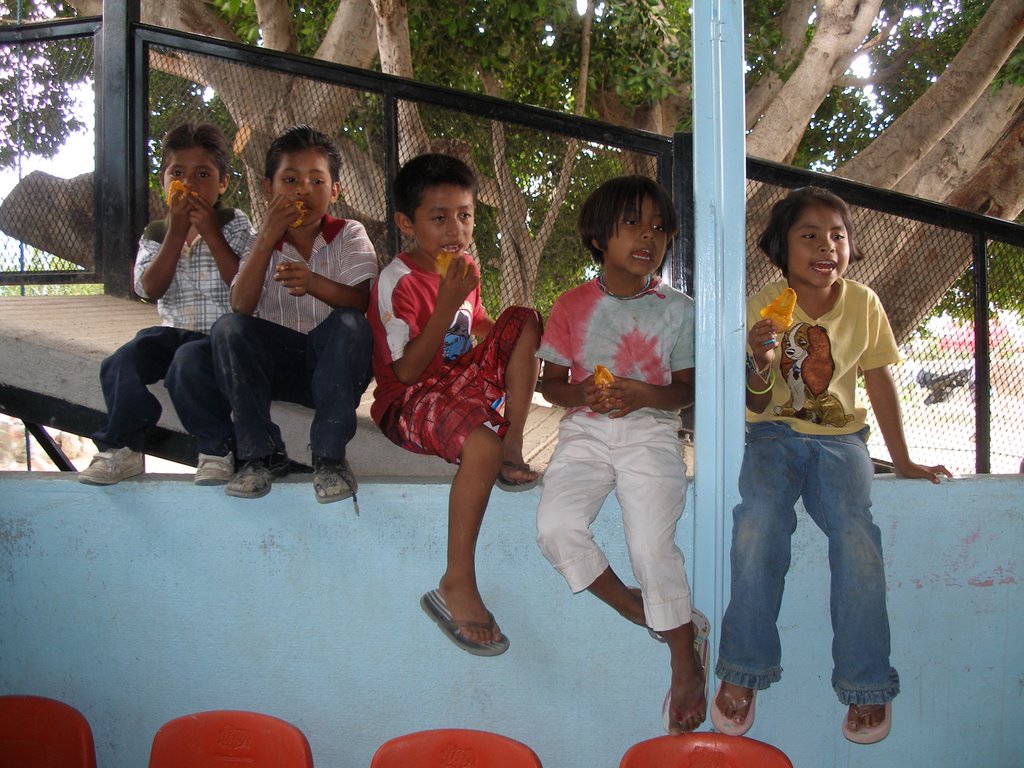
That tune by James Taylor has been running through my head ever since I got back. When our group first entered the U.S. in Houston, it felt like a foreign country: all the fast food, shops, cell phones, and fast pace. Now that I am in my home again I still feel as though I am a foreigner, a stranger in my own life. I am not the same person I was when I left. I once read that "the truth will indeed set you free, but first it will shatter the safe, sweet way you live." I have never known that to be more true than now.
Even though I am exhausted, physically and emotionally, from this past week, I miss the children and their patience with this gringa who speaks Spanish un poco; I miss the little store down the bumpy dirt road with fresh vegetables, those sweet yellow mangoes, and the family whose lives depend on it; I miss playing the never-ending Uno game with Luiz and Luz and others and their patois sign language arguments over who is cheating; I miss the little girls I met at the garbage dump and wish I had more Spanish so I could listen to them; I miss the quiet walks through the village at sunrise, broken by the sounds of roosters and dogs.
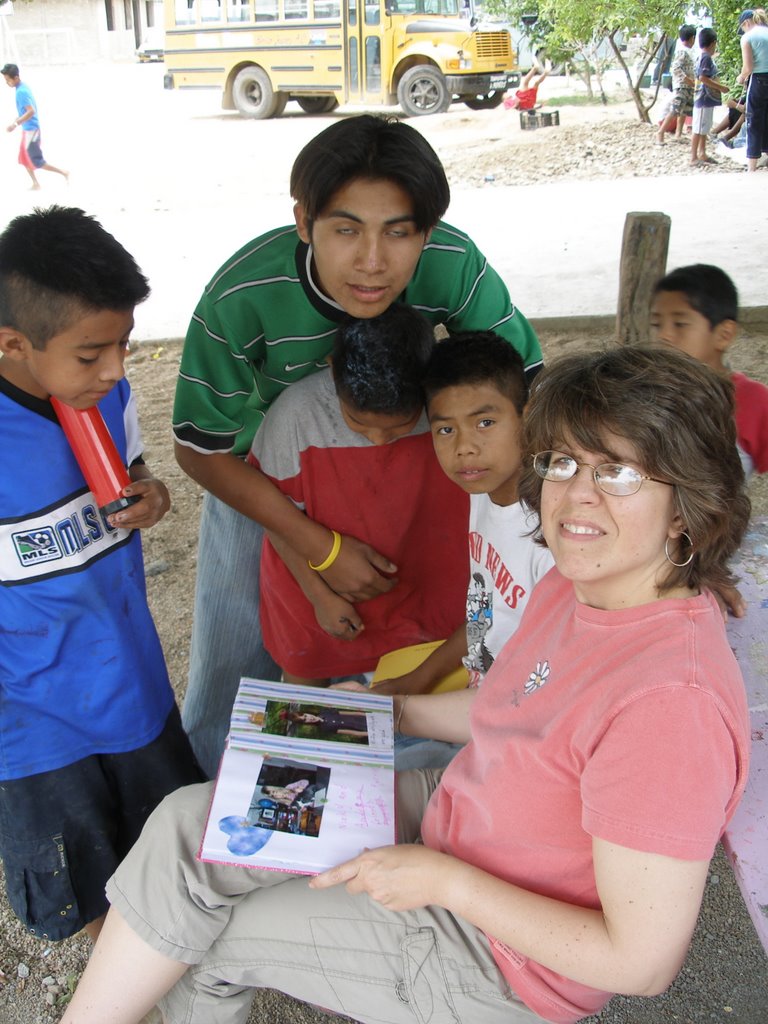
I have stories to tell; I'm just not ready to tell them. I have so much emotion, so much meaning inside; I just don't know yet how to live my life with them. I know my life and how I live it must change. I'm still praying and waiting. I have no doubt that God is leading me; I just don't know toward which step, but it is already difficult to remain empty, to not fill and cover these feelings, to empty myself of that which I do not need. I know that in order to make music, a drum, a flute, any instrument must be empty; that we have no use for love if we are full and content; that true compassion requires sacrifice and humilty.
One of the Five Remembrances of Buddhism says that all we have are our actions. Everything else is temporal. I pray that my present actions, and those that I choose, may be worthy of the experiences of the previous week.
More to come in the days and weeks ahead...
Friday, May 19, 2006
the Blog...it MOVES!!!
Beginning tomorrow my husband and I will be on a church mission trip with 11 other adults in Oaxaca (wha-HA-ca), Mexico at the Casa Hogar Benito Juarez orphanage. During the week we will be posting journal entries of our adventures on the website Simply Smiles. There you can also see pictures of the kids, read about the mission of Simply Smiles, and perhaps catch a photo or two of our group working and playing with the kids, about 80 of them!
Click here for a map of Oaxaca.
Adios! Hasta luego!
Click here for a map of Oaxaca.
Adios! Hasta luego!
Sunday, May 07, 2006
A 'Comma' Kind of Love

Ps. 23; John 10: 11-18; 1 John 3: 16-24
******** United Church of Christ
May 7, 2006
Do you remember when this picture was taken? I was told you had just had a fire drill (I don’t know of any other church that does fire drills) and came out onto the lawn for the picture. You can see that the doors to the church were left wide open; a very telling gesture, with more than one connotation. A number of you are wearing your ‘God is still speaking’ t-shirts. It’s a beautiful warm day yet you all chose to come to church: about 60 adults and 20 kids. Although it appears your pastor is missing from the picture, really she is not. She’s the one perched on top of the ladder taking the photograph. And she formed you in the shape of a comma, as a way of saying that God is still speaking through you. God is not finished with you; praise God!
Seeing all of you in this picture got me thinking about the kind of love to which God calls the Church to be and to reveal and to practice. A comma, in all its simplicity, is a wonderful illustration of this love. It is a love that is open-ended, without limits and conditions. It is a love that possesses a willingness to be led, toward the yet-to-be-realized future of infinite possibilities. It is a love that has the ability to let go of the outcome and of our desires for the sake of the other. It is a love that we know in this way: that Jesus laid down his life for us. Jesus’ death on the cross was a comma in the expression of God’s love for us.
We’d like to think that it is love that motivates everything we do in church. We’d like to think that way. But we know, we know what lurks inside our hearts, and indeed, our hearts condemn us. We are not always willing to be led; we are a stubborn lot. Sometimes we place limits and conditions on our love. Often we try to control and manipulate the situation at hand, not to mention a few people, so as to quell our fear and satisfy our own desires.
We’re not all that different from the early Christians; in fact, we haven’t changed much, in that we still need to hear the ancient words and how they speak to us today. When the apostle Paul wrote his famous chapter on love in his first letter to the Corinthians, about love not being envious or boastful or arrogant or rude, he did so because the brothers and sisters of the Corinthian church were behaving exactly this way with one another. It always tickles me when couples choose this passage for their wedding, thinking that it is such a romantic passage about the feeling of love. Love, in the Bible, is hardly ever a feeling. In God’s lexicon, love is an action verb. And for we who are Christians, we see this most clearly in the life, death, and resurrection of Jesus.
In the Heidelberg Catechism, the FAQ (frequently asked questions) on Christian life, it is asked of us, “What is your only comfort, in life and in death?” The answer: “That I belong—body and soul, in life and in death—not to myself but to my faithful Savior, Jesus Christ.” To love is to lay down one’s life for another, to acknowledge that our lives do not belong to ourselves but to Christ and to the world. Author M. Scott Peck defined love this way: “The will to extend one’s self for the purpose of nurturing one’s own or another’s spiritual growth.” He recognized that our motives are rarely pure, especially when we love. That is why we follow Jesus, God’s Anointed One, who shows us how to love, how to extend ourselves for the well-being and wholeness of the other.
When I first dreamed of becoming a minister, I thought I was laying down my life for others, in what I thought was the single response I could give for Jesus laying down his life for me. The words of the hymn “When I Survey the Wondrous Cross” brought my heart to its knees: “Love so amazing, so divine, demands my soul, my life, my all.” I never thought I would be called by God to lay down my ministry for another calling, that of motherhood and marriage partner. But over the years I have seen how being a mother has made me a better pastor and how not being a pastor has made me a better mother. This time of letting go of my vocation is but a comma in God’s call in my life. There truly is no “THIS IS WHO YOU’RE GOING TO BE—PERIOD!” in being led by God. God calls us to be many things in many places but through it all, God calls us to love. And to love is to lay down our lives, to be willing to be a comma in the grand scheme of building the kingdom of God.
When we are willing to be led, when we are so eager for God’s wholeness to come to everyone, when we are keen to love without regard to ourselves, we begin to live without fear. When we realize that our future and the future of the Church does not depend solely on us but is in the keeping of the One who leads us, we then become capable of amazing things. We become Easter people and an Easter church: loving, letting go, dying, rising again; working, praying, singing, giving, welcoming, suffering, and loving even more. Instead of trying to change the hearts of others, it is our heart that is changed, opened, and healed.
In your church covenant you have promised God and each other that you are willing to be led by God’s Word and God’s will. You affirm that you are open to the Holy Spirit to lead you and empower you. You state that you are willing to walk with each other as you follow Jesus. You assert that you are forward-looking toward that kingdom of God. And even though you live as a people who love each other, you do not say so out loud in your covenant. Many of you have been here for a number of years, through good times and bad, through hardship and celebration, through death and new life. Why not declare before God and everyone that you will be there for each other no matter what, that you promise to love each other, not only in feeling, but in action? If you are willing to be a ‘comma’ kind of love, then you must practice; and as part of your practice you need to state it in the form of a promise, a promise that is renewed each time you say it.
Saying you promise to love each other is a ‘comma’ kind of love in and of itself. It doesn’t mean you have to like everyone. It doesn’t mean you have to be perfect at loving others. It doesn’t mean you will do everything that is asked of you. To promise to love someone means some days you will give whatever you’ve got and other days you may not be able to give at all. To promise to love someone, to lay down your life for others can mean many things but above all it means that love, the essence of which we know through Jesus, is more powerful, more humble, more radical, more than anything else that might try to undercut that love. By promising to love we admit how fragile we are and our need for God’s grace to live by this promise and to rekindle it each time we speak it.
So, ******** United Church of Christ, how are you living out this ‘comma’ kind of love? How might promising to love each other change the way you worship and work and witness together? What about the future scares you? Inspires you? What is difficult for you about being led? What are the blessings? In what tangible and recognizable ways is Jesus the center and head of your church? How is God calling you to extend yourselves for those in need of God’s grace?
By promising to love, by laying down our lives for one another, in this way we reveal Jesus our Savior, risen from the dead, the One who laid down his life for us. We proclaim to the world that all that serves to destroy love is but a comma, that love itself is open-ended and limitless. We begin to live without fear, to boldly counter a world that uses fear to impose a commitment. We begin to live with true love, love that inspires us to be led; love that calls us to lay down our lives for one another and for our fear-filled world; love that puts a comma after death and leads us to new life. Amen.
Wednesday, May 03, 2006
Triad

Almost could not walk
for the trillium
pinned by their
shy shadowy points
amid the young
tender green
A color only seen
on the heaviest of
moon days
I stooped to lift
its chin, bowed
to the majesty
noonday bright
And the second time
a butterfly winged
my heart I wondered
Does the butterfly
know the trillium?
Sunday, April 30, 2006
Church Potluck
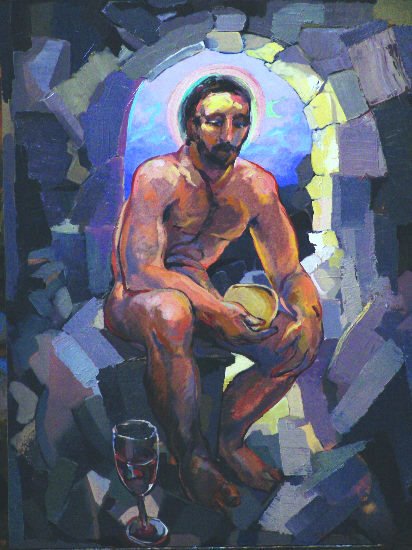
Psalm 145: 8-19; Acts 2: 42-47; Luke 24: 36b-48
******** United Church of Christ
April 30, 2006
Until a few months ago, I didn’t know I was a ‘foodie’. I thought I was just someone who loves to eat and eat well. I’m not quite as adventurous as some (I don’t go for things like squid and would never dream of tasting haggis unless offered to me by a native Scot), but I love Indian, Thai, Vietnamese, and Chinese cuisine. I’m also a fan of Mediterranean foods: Armenian, Lebanese, Greek and Turkish. I’ve also tried Japanese, Korean, Filipino, Cuban, Spanish, Moroccan, and Ethiopian fare, and enjoyed each one. I’ve eaten local dishes while visiting the Bahamas, France, Belgium, Germany, Italy, and Holland. In Ohio I would go with a church group to an annual Hungarian dinner at another church. My mother’s family is from the deep South (Mississippi), so running through my veins is a fondness for collard greens, fried chicken, biscuits and gravy, shrimp gumbo, cornbread, and grits. Mexican food and anything barbecued also make my mouth water (how’s yours doing right now?).
But one of my favorite meals is the church potluck. Everyone usually prepares their beloved and best dish. And there are always some standard offerings: the ubiquitous lemon squares, broccoli salad, baked beans, green bean casserole, baked ziti (name your own preference). Worship is a lot like a potluck supper: some things you can count on; some surprises; some things you wouldn’t go near but someone likes it; some stuff doesn’t get touched at all; too much dessert or not enough, but it’s good just to be together and to have some nourishment, forget about business and put aside our differences for a while.
My husband and I had a potluck supper for our wedding reception. Some folks balked at the idea of having to bring a wedding present and a covered dish but we could not afford to pay for dinner for about 300 people: members of the church I worked at and the church where David was a member, scads of children, plus our family and friends. David and I provided shrimp cocktail for everyone plus a small army and at least four different sheet cakes. My church provided lemonade, iced tea, and coffee. And we ate and talked and danced and ate some more, under a tent on a beautiful June afternoon. It was like a piece of heaven.
I have often wished that there was a restaurant where everyone who came for dinner would bring a dish or dessert to share. All you’d have to pay for would be your beverage and an overhead charge. Every night it would be something different. Every night would be a different crowd, and the name of the restaurant would be “The Church Potluck” or “The Potluck Supper” so as to be non-sectarian. I know health codes wouldn’t allow such a thing but I’d like to think that such an enterprise could help change the world.
Jesus knew about this bond between food and community, how it seems you can’t have one without the other. Jesus made use of meals and food as a way of building community, that commonwealth known as the kingdom of God. In the feeding of the multitudes he demonstrated that there is more than enough for all. A mandate was also given: “You give them something to eat”. He ate with prostitutes, tax collectors, sinners and other outcasts, revealing God’s desire that all be welcome at the table. At the last supper Jesus illustrated with bread and wine that there is no greater love than this than to lay down one’s life for one’s friends.
In the reading from the gospel of Luke we enter into the middle of an Easter meal with Jesus and his followers. He has just shared the first course of bread with two disciples on the road to Emmaus. Now he is taking part in some broiled fish. Bread and fish take us back to the feeding of the multitudes and other humble suppers where the presence of Jesus and God’s love brought new life to those present.
He eats this fish, and shows his scars once again, to give clear evidence of his resurrection. The disciples thought they were seeing a ghost, an experience of the dead rather than of the living. The good news here is that the incarnation did not end on the cross. The risen Christ is the Jesus who died. Jesus Christ is God’s love in living, breathing flesh and bone. We are also flesh and bone. The resurrection hallows our fleshy existence and restores us to the image in which we were created, despite what we may see in the mirror.
For some of us this is a thorny issue, that being in the flesh is a good thing. Some of us have real problems with food. Most of us have turned to food for comfort at one time or another. The term ‘comfort food’ doesn’t conjure up certain images in each of us for nothing. Other times we punish ourselves by denying particular foods or we try to bulk up our self-esteem by refraining from indulging our secret cravings. Some of us analyze every morsel that passes our lips while others of us don’t think twice, let alone remember what we ate. So for Jesus to make plain the resurrection through the flesh of his body and eating of food so as to build this budding faith community sounds problematic at best to us who feel torn whenever there is a church supper.
Sometimes when we eat, we want to satisfy a deeper hunger than the one in our bellies. And this is what Jesus is getting at. He has a poor man’s supper with the disciples but then he moves on to the meat of it all. He teaches them again the scriptures to show them the consistent faithfulness of God. God’s love shown through the resurrection should come as no surprise to them; it is part of the thread of grace that runs throughout the Bible. And it is this grace, this unconditional love, which fills our longing that has no name, our appetite for the ineffable.
Jesus doesn’t just convince of them the resurrection for the sake of believing but so that they would bind themselves together as a body resurrected from their grief, to remember all that they had been told, all that they had seen and heard so as to share it with others. Talking about faith over a good and simple meal is as good as it gets in my opinion. We are nourished in both body and spirit, fully satisfied by God’s good gifts.
Some of you know this in your ‘Dinners for 7’ program. I’ve been at two other churches with a similar series of dinners; it’s a wonderful way to get to know people on a more intimate basis. To me, it’s a way of practicing resurrection, of participating in new life with brothers and sisters in Christ, as is the shelter meal that you provide and other meals that you celebrate together. We celebrate Easter by eating together, creating new life and new joy whenever we join around a table, give thanks, pass the plates, and talk about our life together as the Body of Christ.
When was the last time you had a potluck supper after worship, when most folks would be able to stay? Do you make an effort to have healthy foods present when you gather? Jesus shows us just how ‘fleshy’, how real he is; how ‘fleshy’ is Jesus in this church? Is he a ghost or a real flesh and bone Jesus made alive in each of you and in your life together? How do you connect your “feeding of the hungry” with your own feeding at the Table? How does scripture nourish you and your faith? If we celebrate Easter with eating, how does that influence other meals, like the family dinner, the business lunch, the midnight snack, the guilty binge, the drive-through quick-fix, the commuting breakfast?
When we the Church realize how true and how deep the resurrection is, authentic community, life-sustaining, life-creating community comes into being. Jesus said “Love one another as I have loved you”, that love that is not a feeling or a good idea but action made in our flesh and bone. Jesus told Peter “Feed my sheep”, that we be fed and feed each other in such a way as to transform us and that church potluck into the heavenly banquet where all are welcomed, restored, nourished, accepted, resurrected. Amen.
Thursday, April 27, 2006
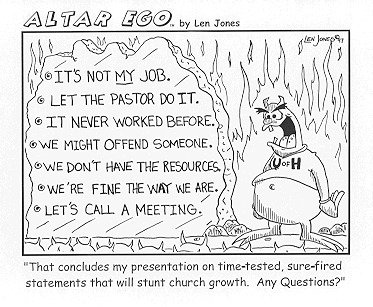
Tuesday, April 25, 2006

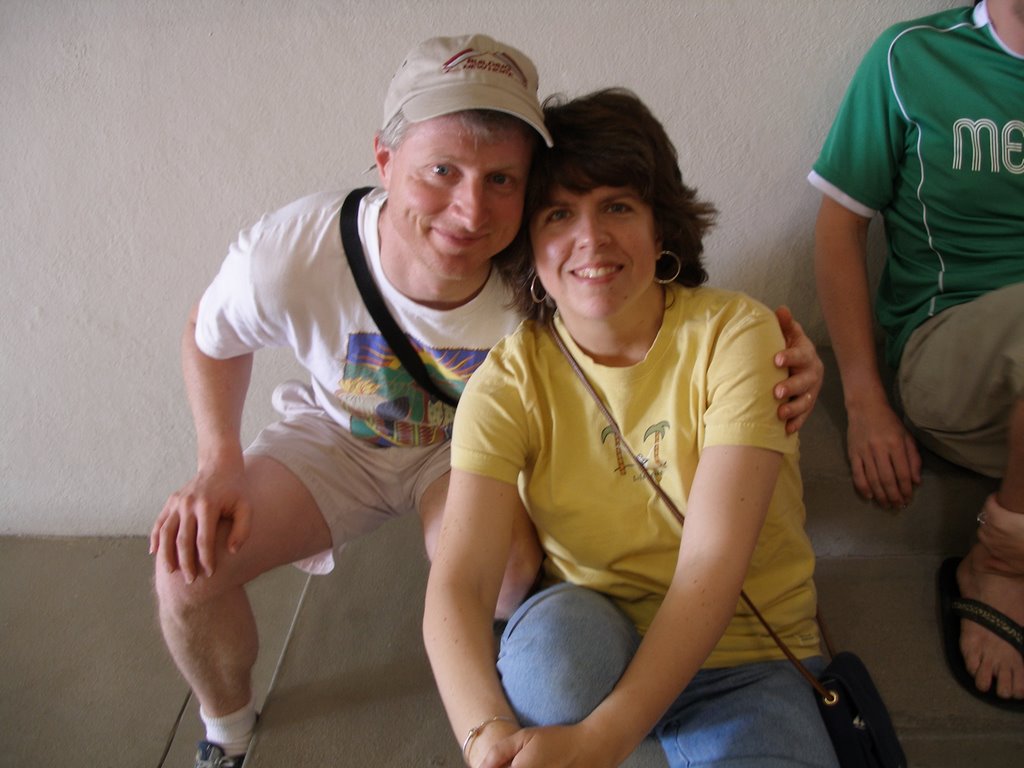
Monday, April 24, 2006
Show Me Your Wounds
Psalm 133; John 20: 19-31
******** United Church of Christ
April 23, 2006
Did you know that this reading from the gospel of John about ‘Doubting Thomas’ is read the Sunday after Easter every year? It makes me wonder if there was some hidden agenda with those who decided what the lectionary readings would be and when they would be read. Perhaps these decision-makers were preachers or sympathetic to them, thinking that because a preacher has to be so eloquent and original Easter after Easter, that they could use the same sermon for the Sunday after, year after year. It’s one of the lowest attended services in the Christian year, so who would know? I know a retired pastor who has what he calls his “$1,000 sermon”; he’s preached it ten times, in ten different churches, and each time he got paid $100.
Or perhaps this was the not-so-hidden agenda: that having witnessed the resurrection year after year we would also need to examine our faith and our doubts about the resurrection as well. If it’s one thing I love about Easter and the resurrection, it’s that God does not take faith as something fait accompli, as a foregone conclusion. This Easter event wasn’t the very convincing magic show where God the Magnificent saws a man in half and then puts him back together again, the crowd “ooh-ing and ah-ing” over all the smoke and mirrors. God has just done one of the most wonderful things since creating the heavens and the earth but also one of the most frightening and unbelievable. We all need to catch our breath and figure out what all this resurrection business is about, not just for our own faith, but more importantly, what it means for us as a church.
The Sunday after Easter is the perfect time for all us doubters to come to church, hungrily seeking the truth after all that Easter hoopla. It is quieter and there is room for us to wonder and ask questions. But over the years it seems this passage has been misused to beat the heads of those who have doubts. We read this incident with the focus on Thomas and all of us who question the resurrection: “There’s always a dullard in the crowd, someone who just doesn’t get it. Boy, do I feel dull myself for not understanding this whole ‘Jesus raised from the dead’ thing”. We haven’t always gotten the message from this reading that it is okay to have doubts about our faith; that a church community can be a safe place to reveal the wounds we’ve received for loving and believing in that which we cannot see.
However, I don’t think Thomas was only expressing doubt. I think Thomas was grieving and feeling very much afraid, as we are when someone we have lived with, shared each other’s wounds, loved through good times and bad, dies. All the other disciples got to see Jesus except Thomas. All the other disciples received the Holy Spirit except him. Maybe he’s thinking he missed his only chance to ever see Jesus again and receive the Spirit’s power to forgive. How wounded can you get? Do his friends and fellow followers of Jesus kick him out of the house because of his declaration not to believe unless he sees and touches Jesus himself? No. Thomas is there with them the next time Jesus comes to them. This tiny, emerging community of faith cannot afford the luxury of conformity at the price of friendship and the witness of faith. They stick together, even though Thomas cannot accept the resurrection sight unseen.
But truly this story is not only about Thomas and the disciples; it’s not about us, really, either. As with all the stories in the gospels, it is more about Jesus and what he is willing to do, how far he is prepared to go to reveal to us God’s great love for all people.
What I love about this scripture lesson is how matter-of-fact Jesus is in showing his scars and wounds to the disciples and to Thomas. He’s not showing off, he’s not bashful about it, he just says “Here they are. Look at them. Touch them. Believe.” He is completely vulnerable with them, exposing his strength through his weakness. Jesus shows the disciples and Thomas the cost of extravagant love, what happens to us when we risk, when we believe, when we love: we will indeed be wounded but we will also be raised and healed. And we will not be the same as we were before. We will be transformed, still bearing the scars of love upon us.
Most folks would not be as straightforward as Jesus about revealing wounds as a result of love. Some of us may even deny that we are wounded. But if we have loved and been loved, we have hurt and have been wounded. Episcopal priest and theologian Margaret Guenther writes that “[most] of us present carefully prepared façades. The self we offer to others is not the product of conscious deception, yet we want no one to disturb the meticulously maintained surface. The message is implicit: Don’t look at my wounds too closely.” The trouble is we may have difficulty seeing the resurrection when we keep our wounds hidden from one another.
But the remarkable thing about this church is that you don’t have a meticulously maintained surface—and hallelujah for that! Your surface is sometimes chaotic, unruly, unkempt. You’re come-as-you-are, not some carefully applied layer of what you wish you were. And that, to me, shows your reverence for Christ and for his spirit of extravagant love. The resurrection is very present in this church precisely because you have loved and been wounded and have been raised again, and you don’t try to hide it. I would advise you not to wear your wounds on your sleeve but if you do, wear them as stripes earned in your on-going mission to be the church.
Educational activist and author Parker Palmer writes, “The mission of the church is not to enlarge its membership, not to bring outsiders to accept its terms, but simply to love the world in every possible way—to love the world as God did and does.” Jesus models in his ministry what we are to do in our ministry: to love the world in every possible way, even by we the church exposing our wounds gained by loving, so that others would not doubt the possibility of the resurrection but come to know and to believe it to be very real and absolutely true.
By your wounds you are ordained and have been given gifts of the Holy Spirit that you might be the church in the world. What are your wounds, ******** United Church of Christ? How have you been scarred as a result of believing and loving in Christ’s name? When you look at your church in the mirror, what do you see, what do you feel? Jesus came to the disciples on the eighth day, the day of God’s new era, the kingdom of God; how do you experience this church as being a part that kingdom and building toward it? Jesus came back for Thomas, that no one would be excluded; who are the ones who are not here who may need you to extend yourselves in a new way?
Thanks be to God for doubt, grief, and fear shared in open, loving community and in the healing presence of Christ. Thanks be to God for the wounds gained by loving and believing in the resurrection of Jesus, that none would be excluded, that all would have life in his name. Thanks be to God for life lived in community, in all its chaotic, unkempt, glorious diversity, there to find life’s blessing—life forevermore. Thanks be to God for our Lord and Savior Jesus Christ who loves us in every possible way and call us, the Church, to do the same. Amen.
Sunday, April 16, 2006
Can I get a witness?
Mark 16: 1-8
******** United Church of Christ
April 16, 2006 – Easter Sunday
Yes, that’s right; that’s all he wrote. The first gospel written, our first account of the resurrection story ends not with a reunion of the risen Christ and his disciples but with the women, the first witnesses to the resurrection, fleeing from the tomb in terror and amazement, saying nothing to anyone because they were afraid. Most scholars agree that the shorter and longer endings of Mark were added by writers and editors other than the original author of Mark. A few New Testament researchers think that the gospel had been longer but the ending had been torn off. However, most other academics accept that this was the original intent of author of Mark: to have a dangling participle of a gospel with seemingly no resolution. But whatever the case, this is the Easter story for us and for the Church this day.
Of all the resurrection texts, this seemingly abbreviated one from the gospel of Mark is my favorite. I like the fact that we don’t get to ‘see’ Jesus raised from the dead; none of God showing off to coerce us into believing. The musical “Godspell” ends in a similar fashion. Jesus is crucified, dies, and his disciples carry his body off the stage and through the crowd singing “Long live God” but no final scene starring the risen Jesus.
I like this text because it’s disturbing as well as comforting, filled with holy terror as well as reassurance. With our scientific knowledge and post-modern minds we may find it easy to be glib about the resurrection when we say “Christ is risen! He is risen indeed!” Are we embarrassed by this public witness, even amongst ourselves? Has the resurrection lost its’ power with us? Then perhaps Jesus was never really dead to us either. If we cannot experience Jesus as really and truly dead, then we can hardly experience him as really and truly resurrected and alive again. So I like a resurrection text that puts the burden of witness on us.
If this resurrection took place in our modern world, a group of forensic scientists would be called in to examine the ‘evidence’ pertaining to a missing body. The place where Jesus’ body had been laid and the cloth that had covered him would be tested for DNA and fingerprints. The surrounding grounds would be inspected for footprints to determine whether the body had been removed. But it is only in the past 20 years that DNA evidence has been given so much weight. Before DNA testing, investigating a death was conducted for thousands of years the old-fashioned way: witnesses would come forward and tell what had happened.
In this morning’s scripture reading we have witnesses, three eyewitnesses to this resurrection; the only problem is they aren’t talking. And frankly, I don’t want them to say anything. It’s too easy to let them do all the talking about seeing the stone rolled away and a young man dressed in a white robe telling that he, Jesus, is not here. Mark does not need a personal appearance of the risen Christ to confirm his faith. Like the lyric from Handel’s “Messiah”, Mark “knows that his redeemer liveth”.
But do we need the personal appearance of the risen Christ to affirm our faith? How is it we believe in the resurrection without actually having seen him ourselves? Do we simply trust the witness that has been given in other gospels and down through the ages? We cannot demand, like Thomas, that unless we see the mark of the nails and put our fingers in his side that we will not believe. What is the root of our Easter faith?
Somehow, somewhere in our lives we have had an experience of the resurrection, of Jesus being true for us in a very real way. Or we have heard someone give a powerful witness to their Easter faith as they have experienced it. This is what us Easter people call testimony.
Testimony is not something Congregationalists practice with any great ease, or at all, for that matter. Faith is considered a private affair, between believer and God. As the apostle Paul has preached to us, our faith is nothing for us to boast about. But there is a difference between boasting and witnessing, between calling attention to oneself and calling attention to the very real and saving presence of Jesus Christ. And as we are a part of the United Church of Christ, calling attention to Christ is exactly what we are about.
I hope that some of you have seen the new ad for the United Church of Christ; someone told me they saw it on the A&E channel. You can also go on the church's website and see it there. This ad and the previous ‘bouncer’ ad are part of our church’s “Still Speaking Initiative”, which proclaims that the witness of the faithful and the revelation of God did not end with the Bible, that God still speaks fresh words, that we are to listen and to give witness to what we have heard and what we have seen at work among God’s people; and when I say ‘God’s people’ I mean all people.
This dangling end of the gospel of Mark seems to imply that we who read this gospel, this good news, are to be the witnesses to Jesus’ resurrection. We are to give testimony to what we have seen and heard of the resurrection in our own lives and in the life of the Church. We live in a world where everyone, and everything, dies; I’ve quoted this song before: “No matter how I struggle and strive, I’ll never get out of this world alive.” So in this finite world, where do you find your hope? Where have you and your congregation seen life out of death? Have you also felt terror and amazement in the presence of the resurrection of Jesus? Have you too been so overwhelmed by the fear of God that you could not tell a soul because you were afraid?
Author Richard Swanson, who has written a commentary on the Gospel of Mark says that “[the] task of Easter (which is every Sunday for an Easter-based faith) is to tell stories about resurrection in a world where everyone dies.” The way you have started telling these resurrection stories, giving witness to your faith, is during announcements and through prayer requests. You give witness to the life of Christ at work in this church when you make announcements. And there are so many, and yes, they take up so much time, but this testifies to the life and love of Christ that is very present and palpable in this church, in you, the people who make this church what it is. When you ask for prayers, you sometimes give some background behind the request, which is a testimony of the trust and the love you have for one another and to your belief that prayer makes a difference. And the Good News Team invites members to give testimony to why they are members here and what difference the church has made in their lives.
But if I were to ask you to give witness, to make testimony about your Easter faith, what would you say? Does this leave you too feeling like running in terror and amazement? Let’s go back to the text to see what the good news is for us.
The messenger of the resurrection, the young man in the white robe, says several things. The first is, do not be alarmed. Whenever an angel or heavenly representative appears, usually the first words out of their mouths are ‘do not be afraid’. So, first step of giving witness to the good news of the resurrection: do not be alarmed.
Second, remember why you are here today. You are seeking Jesus of Nazareth, who was crucified. You are not seeking evidence; you are not looking for the body. Why? He has been raised; he is not here, that is, he is not in this place of death. He is among the living. And so are you.
And where are the living? Third, Jesus is going ahead of you, to Galilee, where you will see him, just as he told you. He is going to Galilee, where it all started. This is not the end but only the beginning. We are to go back to the stories of Jesus, to his words and his life, and to read them again and again and again, so that they become real to us, as real as our own lives. Many of us, when we want to draw strength from our faith, will remember Jesus’ words that we were taught to memorize so long ago. What words of Jesus do you remember that have special meaning for you?
If we go back through the gospel of Mark we see a Jesus of action, a teacher, a healer, a man of prayer, of justice, a man of love that was not a feeling but a way of living and being engaged with this world according to God’s law of love. We hear Jesus’ repeated promise that he would rise again. At the very beginning of Mark we hear the words “prepare the way of the Lord.” And at the start of his ministry in Galilee, we hear Jesus say “The time is fulfilled, and the kingdom of God has come near; repent, and believe in the good news.”
This is the resurrection of Mark’s gospel. It is us going back to the beginning of the story, realizing that the kingdom has come near, turning toward God and believing the good news of Jesus Christ. It is us preparing the way of the Lord, making his paths straight, crying out like a voice in the wilderness that God is coming. Jesus lives because he lives through us. Jesus is alive because he is alive in us and because we are alive. Not just existing, not just breathing, not just taking up space, but alive. And because we are alive we are able to give witness, to make testimony, that Christ is risen from the dead.
So, ******** United Church of Christ, are you ALIVE? How is God still speaking to you and through you? What is the good news of Jesus Christ to be found here among you and within you? Where is your hope? When have you as a congregation seen life out of death? What words of Jesus disturb you as well as comfort you, cause you to fear as well as offer reassurance? What about your faith makes your jaw drop and leaves you dumbfounded? What keeps you from running away in fear? If someone asked you why you believe in the resurrection, what would you say?
Thanks be to God for an Easter faith that still has the power to instill awe in us and make our faith a humble one. Thanks be to God for the words, the life, and the death of Jesus that make real his resurrection. Thanks be to God for speechless witnesses at the tomb so that we may find our own voices and give witness and testify with our lives and with our life together that Christ is indeed risen from the dead. Amen.
Subscribe to:
Posts (Atom)