
Monday, September 15, 2008
from the Sunday bulletin
Find more videos like this on Monroe Congregational Church
This was from Sunday, Sept. 7, 2008. I'm front-and-center behind the communion table, singing with the church choir and guest vocalist Suzanne Vick, who reminds me of Rory Block in too many ways!
If the theology in this song were to be taken literally, I would find it quite offensive to my sense of reasoning. It brings up that cranky, difficult issue of theodicy--where is God in our suffering if God is all-powerful and all-loving? God is not about rescue but presence. When I think of 'delivered' I recall the midwives who companioned me while I gave birth. I was not spared the pain of labor, but I was graced with their care and faith in my ability to bring my children into the world. And if I am saved from anything, it is from myself. For me the meaning of this song is that we are not to give up hope, that we are companioned in all our sufferings, that God's grace is more than sufficient, and that mercy is God's ultimate power lived through our giving and loving.
He Never Failed Me Yet - by Robert Ray
I will sing of God's mercy
Every day, every hour he gives me power
I will sing and give thanks to thee
For the dangers, toils and snares
That he has brought me out
He is my God and I'll serve him
No matter what the test
Trust and never doubt
Jesus will always bring you out
He never failed me yet!
I know God is able
To deliver in time of storm
I know that he'll keep you
Safe from all earthly harm
One day when my weary soul is at rest
I'm going home to be forever blest
Trust and never doubt
Jesus will always bring you out
He never failed me yet!
Didn't my God deliver
Moses from King Pharoah
And didn't he cool the fiery furnace
For Shadrach, Meshach and Abednego?
When I think what my God can do,
He delivered Daniel, I know he will deliver you
Trust and never doubt
Jesus will always bring you out
He never failed me yet!


Wednesday, September 10, 2008
She said, He said
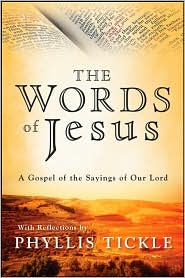
from Phyllis Tickle's The Words of Jesus: A Gospel of the Sayings of Our Lord:
"I just had never thought about Jesus being human at that level, of His being so subject to the same kind of innate human instincts and qualities that the rest of us are. Of course He presents and conducts Himself differently in different situations. Why ever wouldn't He? Once was the time I would have regarded such a discovery as close to irreverent and a threat to His godness. Now I embrace it with a kind of fond gratitude. It was, you must understand, the first place in the course of this work that He demanded I let Him out of my preconceptions."
I doubt that Ms. Tickle, a senior fellow of the Cathedral College of Washington National Cathedral, would consider herself a literal reader of the Bible. Yet she treats these 'Sayings' (yes, beginning with a captial 'S' as well as a capital 'H' whenever speaking of Jesus in the third person) as though they are historical fact. If Jesus is so human, aren't also those who supposedly wrote down what he said, incidentally, the first to do so approximately 40 years after he died? I don't really know if we can say beyond a shadow of a doubt that the historical person, Jesus of Nazareth, actually said any of these sayings. What we can say is that these sayings are attributed to him, which speaks to what his followers believed about him as much as who he really was.
What is important to me is that we have these sayings, these stories, public and private teachings, exhortations and laments, of a time and place and a person when it seemed that history and very human lives turned in another direction. For me, faith needs to include a healthy amount of skepticism, otherwise we might sound as adulatory as Anne Rice in Christ the Lord: Out of Egypt, an imaginative view of Jesus' unknown childhood.
I fell in love with Jesus myself when I was in high school. He was perfect in every way to me: a brother, a friend, a savior and healer of my deepest woes, the source of my joy. But in the best love affairs we mature and grow and so does our view of our beloved. It does not diminish the person but reveals the true self in all its beauty and imperfection.
It is not the sayings that are so important, or even who said them, but our response to them: how we integrate them in our lives and in our eternal beingness.
Monday, September 01, 2008
Always Go to the Funeral

Matthew 16: 21-28; Romans 12: 9-21
Congregational Church of ******
August 31, 2008
My youngest daughter Olivia, when she was about five years old, had already gained a piece of wisdom that we adults sometimes have difficulty with: do what you like least first and save the best for last. She came to this conclusion when having several things to eat on her plate. She chose to save the food she liked the most for last so she could end her meal with joy rather than with disgust at having to eat something she didn’t like. Now if we could just get her to apply this wisdom to cleaning her room…
It’s that age-old problem: if we did only what we felt like doing, not much would get done. Perhaps you’ve heard the one about the husband who came home from work to find the front door ajar, with dirty handprints all over it. As he entered the house the smells of burnt food and dog excrement assaulted his nose. Toys, games and puzzles were strewn about the living room. One child was making a finger painting on the refrigerator with baby food. Another child was covered in mud making mud pies on the kitchen floor, a bucket of wet dirt beside him. The contents of a box of cereal were scattered on and below the dining room table. The sink was full of dirty dishes and there was no dinner in sight.
The husband began to look for his wife with great anxiety, worried that something had happened to her. As he went upstairs the floor was carpeted with dirty laundry. In one of the bedrooms the third child was watching TV with her eyes glazed over. He opened the door to the master bedroom to find his wife on the bed, reading a magazine and eating chocolates, with the dog stretched lazily on the other side, his head on the husband’s pillow. By this point the husband had abandoned anxiety for anger. He sputtered at his wife, “What in the world happened here today?!” The wife replied, “You know when you ask me what did I do today? Well, today I didn’t do it.”
Do you ever wonder what would the church look like if we did not follow Jesus and his example, if we did only what we felt like doing and let the rest slide?
In a Newsweek/Beliefnet poll that asked the question “why do you practice religion”, 39% responded “to forge a personal relationship with God”. 30% replied “to help you be a better person and live a moral life”. Only 10% responded “to connect with something larger than yourself”. 8% said “to give your life structure and meaning”. And only 3% answered with “to be part of a community”.
It seems that in our country, or at least the people who answered the poll, folks are more concerned with having a personal experience of God rather than on how that experience could be gained by serving others, by putting aside one’s life for the sake of another so that someone else could also experience God in a way that would transform their life.
In 1983 the then Cardinal Joseph Ratzinger wrote that both “personal experience and the common faith of the church” are important, “[but] a dogmatic faith unsupported by personal experience remains empty; mere personal experience unrelated to the faith of the Church remains blind”. Seeking a personal experience of God as the main goal of faith, outside of community and the demands it places on us is a feel-good faith, one that when tested by trial and suffering will not sustain us.
In this morning’s gospel lesson we see the flipside of Peter’s confession of faith. In the verses before Jesus has just declared that he will build the church upon Peter’s humble conviction. Can you imagine Peter’s state of mind? Talk about a personal experience of God; you can’t get a more personal high than Jesus, God’s own son, slapping you on the back for the right answer which could only come from God, and guess what? You win the grand prize: head honcho of the fledgling, soon-to-be main God game in town!
Then right after this Jesus begins to tell the disciples that before it gets worse, it’s going to get worse. There will be no righteous Davidic king upon Jerusalem’s throne. There will be no just war against the Roman occupation. He tells them that he must suffer at the hands of the leaders of his own people, his brothers really, that he will be killed, and on the third day be raised. This was not exactly the kind of messiah the people of Israel were waiting for. Not only this, but Jesus was going to do this of his own volition. Peter thinks Jesus must be out of his mind to volunteer for such a suicide mission, to allow himself to be killed for no rational reason. Perhaps Peter is also thinking that Jesus’ death might lead to his own funeral. As one commentary put it, Peter and Jesus then get into a shouting match, out of which comes one of Jesus’ most difficult teachings.
“If any want to become my followers, let them deny themselves and take up their cross and follow me. For those who want to save their life will lose it, and those who lose their life for my sake will find it. For what will it profit them if they gain the whole world but forfeit their life? Or what will they give in return for their life?”
Who are we when push comes to shove? Jesus is asking his disciples and us, who are you in relation to the gospel? What exactly are you willing to give your life for, that life that has not been the same since Christ walked into it? Taking up our cross does not necessarily mean that we will be required to die for our faith but we will be asked to die to ourselves, to loosen our grip on the way we prefer things, what we desire, what we’re comfortable with, for the sake of the community of Christ. Henri Nouwen defined community as “that place where the person you least want to live with always lives.” Jesus is calling us out of ourselves that the common good would flourish, shaped by grace and the inspiration of Christ.
If it’s one thing we know about Jesus it’s that he’s always leading us to places we’d rather not go and teaching us about doing things we’d rather not do. Paul in his letter to the Romans exhorts his readers that because they are saved by grace their behavior should be changed in ways that are radically different from the ways of the world. “Outdo one another in showing honor.” “Bless those who persecute you.” “Do not repay anyone evil for evil.” “Live peaceably with all.” In other words, do not do what comes naturally; rather do the thing that comes the most difficult to you.
Deirdre Sullivan, a freelance attorney in Brooklyn, NY, in her essay for the NPR series “This I Believe”, put it this way:
“‘Always go to the funeral’ means that I have to do the right thing when I really, really don't feel like it. I have to remind myself of it when I could make some small gesture, but I don't really have to and I definitely don't want to. I'm talking about those things that represent only an inconvenience to me, but the world to the other guy. You know, the painfully under-attended birthday party. The hospital visit during happy hour. The Shiva call for one of my ex's uncles. In my humdrum life, the daily battle hasn't been good versus evil. It's hardly so epic. Most days, my real battle is doing good versus doing nothing. …In going to funerals, I've come to believe that while I wait to make a grand heroic gesture, I should just stick to the small inconveniences that let me share in life's inevitable, occasional calamity.”
As Christians who live in community with one another we find ourselves fighting the same battle: doing good versus doing nothing. The good that we do need not be some grand heroic gesture nor a small inconvenience but indeed an extravagant outpouring of ourselves. We do this not for ourselves but for the other, even the one that can appear to us to be an enemy, that they may come to know the saving love of Christ and know themselves as beloved sisters and brothers.
Paul then ends his exhortation with a quote from the book of Proverbs when he says “if your enemies are hungry, feed them; if they are thirsty, give them something to drink; for by doing this you will heap burning coals on their heads.” Burning coals is a metaphor for purification; when Isaiah answered God’s call to be a prophet, one of God’s servants touched Isaiah’s lips with a burning coal that he could then speak God’s truth with clean lips. When we offer the stranger, the outcast, the enemy the extravagant outpouring of ourselves, the burning coals we heap upon heads is the help of removing the barriers between them and God’s grace and by doing so, between us and God’s grace.
Dr. Martin Luther King, Jr. in his book Strength to Love called it a “double victory”. In his quest for equal rights for black Americans he was not satisfied with pressuring white Americans into giving in; he wanted more than mere retribution. He wrote,
“We shall match your capacity to inflict suffering by our capacity to endure suffering. We shall meet your physical force with soul force. Do to us what you will, and we shall continue to love you. Throw us in jail, and we shall still love you. Bomb our homes and threaten our children, and we shall still love you. Send your hooded perpetrators of violence into our community at the midnight hour and beat us and leave half dead, and we will still love you. But be assured that we will wear you down by our capacity to suffer. One day we shall win freedom, but not only for ourselves. We shall so appeal to your heart and conscience that we shall win you in the process and our victory will be a double victory.”
Who are you, Congregational Church of ******, in relation to the gospel of Jesus Christ? When push comes to shove, as it inevitably does in the Church, what are you willing to risk your life together for? For what or for whom are you willing to suffer? In what ways is God calling you to give an extravagant outpouring of yourselves? Who would be the person or people that would be difficult for you to see as beloved sisters and brothers in Christ? What moments come to your mind when you think of members of your church loving from the center of who they are, and discovering beauty in everyone?

We exist, we live not only that we may experience the living God but so that others may also be drawn to know God by the way we live our lives, by the truth that we proclaim: that in order to find our lives we must first lose them, that evil is not overcome by evil but overcome with good. Our ability to love in this radical way is not born out of our solitary life but in community; community that treats an enemy like a friend, that seeks to live not in agreement but peaceably, in harmony with all, community that is shaped by Christ and our participation in the cross and the resurrection. Amen.
Monday, August 25, 2008
Bound and Loosed

Matthew 16: 13-20; Romans 12: 1-8
****** Congregational Church, Bridgeport, CT
August 24, 2008
I have always been fascinated by the life of nuns and monks. I have watched movies such as The Song of Bernadette and Agnes of God and many others. I have read books and stories about their aesthetic life. I am intrigued by the human desire to unite with God so fully that one renounces worldly living for life in community, bound by sacred vows of poverty, obedience and chastity. These vows are presented as an offering to God, a sacrifice, not as a refusal of God’s gifts of fullness, free will and sexuality but as a surrender of these, as a gift to God, that the living of their lives may be transformed into something sacred.
One of my aunts on my mother’s side was not a nun per se but she did give her life in a similar manner to be a missionary in India for the Methodist church—for 37 years. Now in her eighties she believes God is calling her back to India.
Where does this single-mindedness, this single-heartedness, come from? Most of us struggle with the numerous demands placed on our love, our strength and patience, our money and resources, and our time. How does one focus so clearly on Christ that one is able to relinquish the struggle and give everything over to God?
****** Congregational Church, Bridgeport, CT
August 24, 2008
I have always been fascinated by the life of nuns and monks. I have watched movies such as The Song of Bernadette and Agnes of God and many others. I have read books and stories about their aesthetic life. I am intrigued by the human desire to unite with God so fully that one renounces worldly living for life in community, bound by sacred vows of poverty, obedience and chastity. These vows are presented as an offering to God, a sacrifice, not as a refusal of God’s gifts of fullness, free will and sexuality but as a surrender of these, as a gift to God, that the living of their lives may be transformed into something sacred.
One of my aunts on my mother’s side was not a nun per se but she did give her life in a similar manner to be a missionary in India for the Methodist church—for 37 years. Now in her eighties she believes God is calling her back to India.
Where does this single-mindedness, this single-heartedness, come from? Most of us struggle with the numerous demands placed on our love, our strength and patience, our money and resources, and our time. How does one focus so clearly on Christ that one is able to relinquish the struggle and give everything over to God?
Mother Theresa said that these vows of chastity, obedience, and poverty are given that one may serve and love Christ with an undivided love. Our love is often divided by loving others, loving self, loving money and possessions and many other concerns. There are times it is difficult to see that we can serve and love Christ through these other loves, that Christ is present in these other loves and works through them. Serving God as a nun or a monk or priest or, in our tradition, a missionary or a minister, is not a path for everyone. Yet God still calls us to love with an undivided love, to unite ourselves with God, to be bound to God and each other in such a way that we will not be conformed to this world but transformed by the living of our faith and by the renewal of our minds. As Paul says in his letter to the Romans we are called to present our whole lives, all of it, as a living sacrifice to God, that the living of our lives may be transformed into something sacred.
But how are we, whose tradition does not include sacred vows to serve God with our whole lives, to unite with God and with each other that we might begin to live our lives as a living sacrifice? Those who take sacred vows are bound by them. Two of the ways we know this is through the promises of marriage and church covenant. Some might argue that we don’t really think of ourselves as being bound by those promises, that they can be broken quite painfully and with great struggle and difficulty but they can be broken. We break the bonds of community, of covenant with one another and with God and other churches. We break the bonds of humanity with any who might be different than we are, who think differently, look different, behave, live, believe, vote, speak differently than we do. We are a covenant people and we are a covenant-breaking people.
Our nation began with a covenant: “We the people…”. Our faith began with a covenant between God and Abraham and Sarah, a covenant that has been renewed again and again. God gave us a new covenant in Jesus, that salvation, grace and forgiveness, the unconditional love of God would be given to all nations, all people.
When Jesus said to Peter, “Whatever you bind on earth will be bound in heaven”, the binding that he spoke of was to be something life-giving. It was not to be a bond like that of chains or handcuffs but to be in bonds as in knit together, tied together like a web, like a garment, like sinew to bone, like hand in hand, heartstring to heartstring.
In being bound to each other and to God we are not completely free. This has been a problem for humankind since time immemorial. Cain and Abel were bound by blood yet Cain killed his brother. The Israelites, who were once slaves in chains and set free by God, broke their covenant with God and worshipped a golden calf. Our nation, free from the tyranny of the British Empire, wrote the Bill of Rights to establish freedoms of speech and privacy and many others, yet these freedoms are often abused in the name of freedom and at the expense of the bonds we share with one another as citizens, friends, and neighbors of the same country. We think we can say anything because we have the right to the freedom of speech. But when that speech is hurtful, abusive, and violent we tear at and loose the bonds of community and covenant that hold us together.
These bonds of covenant to God and each other are to set us free to love one another, not to destroy one another. To loose is to destroy, to dissolve bonds. What we destroy, what we dissolve, what we loose on earth will be loosed in heaven, Jesus also warned us. We have been given freedom but it is to be a responsible freedom, a sacrificial freedom. It is a sacrificial freedom in that we sacrifice neither the individual nor the community at the cost of the other but both are a living sacrifice for each other, that is, they make each other sacred. We have been given the keys to the kingdom; we are co-creators of this kingdom with God; we are responsible for binding what needs to be bound and dissolving what needs to be dissolved. We need to dissolve our unwillingness to listen to those who disagree with us, even violently disagree.
“A man said to the universe: ‘Sir I exist!’ ‘However,’ replied the universe, ‘The fact has not created in me a sense of obligation.’” These lines written in 1899 by Stephen Crane, who wrote The Red Badge of Courage, suggest that the universe is indifferent toward us, that it does not owe us anything, nor are we bound to it, thus we are set free to create the destiny of our own choosing.
Perhaps if we believe the universe doesn’t owe us anything, then the universe can’t disappoint us. But imagine going to the government, to your senator or representative, to the president, or to your employer and receiving this response of indifference. Imagine going to a parent, declaring one’s existence and being given the answer, “That doesn’t mean I’m obligated to you or to your happiness.” The irony of this poem is that God is obligated to us and we ought to be obligated to one another—in our common bond of being a creature of this earth. The universe is really the community, the vast cosmic neighborhood we live in. To live in community is to be bound to one another, to be obligated to one another. In my view this poem is a response to individualism gone rampant, where the bonds between us and the universe have been loosed.
But how are we, whose tradition does not include sacred vows to serve God with our whole lives, to unite with God and with each other that we might begin to live our lives as a living sacrifice? Those who take sacred vows are bound by them. Two of the ways we know this is through the promises of marriage and church covenant. Some might argue that we don’t really think of ourselves as being bound by those promises, that they can be broken quite painfully and with great struggle and difficulty but they can be broken. We break the bonds of community, of covenant with one another and with God and other churches. We break the bonds of humanity with any who might be different than we are, who think differently, look different, behave, live, believe, vote, speak differently than we do. We are a covenant people and we are a covenant-breaking people.
Our nation began with a covenant: “We the people…”. Our faith began with a covenant between God and Abraham and Sarah, a covenant that has been renewed again and again. God gave us a new covenant in Jesus, that salvation, grace and forgiveness, the unconditional love of God would be given to all nations, all people.
When Jesus said to Peter, “Whatever you bind on earth will be bound in heaven”, the binding that he spoke of was to be something life-giving. It was not to be a bond like that of chains or handcuffs but to be in bonds as in knit together, tied together like a web, like a garment, like sinew to bone, like hand in hand, heartstring to heartstring.
In being bound to each other and to God we are not completely free. This has been a problem for humankind since time immemorial. Cain and Abel were bound by blood yet Cain killed his brother. The Israelites, who were once slaves in chains and set free by God, broke their covenant with God and worshipped a golden calf. Our nation, free from the tyranny of the British Empire, wrote the Bill of Rights to establish freedoms of speech and privacy and many others, yet these freedoms are often abused in the name of freedom and at the expense of the bonds we share with one another as citizens, friends, and neighbors of the same country. We think we can say anything because we have the right to the freedom of speech. But when that speech is hurtful, abusive, and violent we tear at and loose the bonds of community and covenant that hold us together.
These bonds of covenant to God and each other are to set us free to love one another, not to destroy one another. To loose is to destroy, to dissolve bonds. What we destroy, what we dissolve, what we loose on earth will be loosed in heaven, Jesus also warned us. We have been given freedom but it is to be a responsible freedom, a sacrificial freedom. It is a sacrificial freedom in that we sacrifice neither the individual nor the community at the cost of the other but both are a living sacrifice for each other, that is, they make each other sacred. We have been given the keys to the kingdom; we are co-creators of this kingdom with God; we are responsible for binding what needs to be bound and dissolving what needs to be dissolved. We need to dissolve our unwillingness to listen to those who disagree with us, even violently disagree.
“A man said to the universe: ‘Sir I exist!’ ‘However,’ replied the universe, ‘The fact has not created in me a sense of obligation.’” These lines written in 1899 by Stephen Crane, who wrote The Red Badge of Courage, suggest that the universe is indifferent toward us, that it does not owe us anything, nor are we bound to it, thus we are set free to create the destiny of our own choosing.
Perhaps if we believe the universe doesn’t owe us anything, then the universe can’t disappoint us. But imagine going to the government, to your senator or representative, to the president, or to your employer and receiving this response of indifference. Imagine going to a parent, declaring one’s existence and being given the answer, “That doesn’t mean I’m obligated to you or to your happiness.” The irony of this poem is that God is obligated to us and we ought to be obligated to one another—in our common bond of being a creature of this earth. The universe is really the community, the vast cosmic neighborhood we live in. To live in community is to be bound to one another, to be obligated to one another. In my view this poem is a response to individualism gone rampant, where the bonds between us and the universe have been loosed.
Our nation was built on the foundation of individualism but not at the expense of the community. Here is a definition of individualism from an online encyclopedia: “The individualist sees society as a large number of individuals working together to improve their welfare. The single person is not just a member of a greater unity. In fact, the individual is seen as the ultimate unity, and society is nothing more than a composition. The state is an organised form of society which ensures the individual's freedom by law. Thus, individualist policy tends to approve laws that protect or enhance the liberties of the citizen, but rejects laws that subordinate the individual to the collective.”
However, in the Church the individual and the collective or body are called to live in harmony. The members of the body are not subordinate to the body or to each other but to Christ the head of the Church and to the commandment to love God and to love one another as Christ has loved us. We are free as individuals but we are individuals bound to one another, whether we like it or not, which imposes a responsibility on this freedom we hold so dear.
The values of freedom and life, which our country prizes greatly, are worthy to be sure. But even if these are destroyed there is one thing left that still binds us together and that is love: love that seeks the good for all people on this earth and not just some. If we are not free in any other way we are still free to love and that is what it means to be set free from sin. We are free to love God with our lives, with our minds, with our hearts, with our breath. Even in death, as Jesus showed us, we can still love, even those who hurt us. The bonds of love can never be destroyed and that is why it is worthy of our devotion, our worship and our living sacrifice.
What is it that binds you to the Church? Is it the communion we celebrate? Is it your love for God lived out in the life of Jesus Christ? Is it the community of fellow disciples finding their own way of making Peter’s humble confession that Jesus is the son of the living God? We are not a credal church; our faith is not bound by a creed upon which all must believe. We believe that creeds and statements of faith are a place to begin. So what does it mean when we say that Jesus is the center of our lives and of our life together, when we say Christ is the head of the Church? What do we say of Jesus in the living of our lives? What does this faith community say about Jesus, especially to people who are new and those who are strangers and outcasts? What is the tie that binds you together? What is that bond that is able to transform you from a group of individuals into a body that presents itself as a living sacrifice to God?
The bonds we make, we make not hard and fast but in faith: faith in God, faith in Christ, faith in the Spirit, faith in one another and with humility. Peter confessed his faith in Jesus but it was a confession made by a very human being. Our statements of faith and our efforts to bind ourselves to God and to each other are tenuous, an attempt to name what cannot be named, to see what cannot be seen. It is God who binds us together, who reveals to us in everyday life who we are, to whom we belong, to whom we are obligated, who shows us the difficult, joyful, undivided way of love for all persons and creatures of this earth that all life might be transformed. Amen.
Tuesday, August 19, 2008
How religious fascism can begin
from Slate webzine
The Chick-fil-A Church
Megachurches that want to spread their 'brand' beyond their maximum zoning codes, with enough cash, uh, resources, can now have 'video venues': a meeting place with a screen, say an empty cineplex on a Sunday morning, where all the live worship stuff is done with a young pastor but the sermon is preached by a 'megastar pastor', projected on the screen. Or in some high-tech cases, a 3-D projection--a hologram.
These are churches that focus their loyalty, devotion, commitment to a charismatic leader. Which is why we hear about abuse, scandal, and corruption concerning some of these leaders--they're standing where Jesus should be. But even Jesus wouldn't be standing there. He told his disciples (and others) not to tell anyone that he was the Messiah: in fact, according to Jewish tradition and expectations as recorded by the prophets, he wasn't. He was a reformer of the Jewish tradition, a messenger who got confused with the message.
And when this happens, the message can get confused as well. In fact, it can become anything the messenger wants it to be. Coupled with the one-way communication of television, which is basically what this is, we have the recipe for propaganda, the primary tool in a fascist's bag of tricks.
I wonder if the IRS has gotten wind of these video venues. Do they count as a church? Are they incorporated? When they take a collection, excuse me, offering, where does it go? One can see how this could be abused for political ends, to give hundreds of thousands of people marching orders for whatever agenda some 'megastar pastor' deems important.
Do I sound a little paranoid? I got concerned when even my beloved UCC began an advertising campaign that 'sells' our 'brand'. (Another commercial is coming out this fall.) Our 'brand'? I thought following Jesus was less about declaring ourselves Christians and more about relationships, right ones (meaning righteous), covenant community, compassion, justice, peace--all that stuff the human species is supposed to evolve into. I thought that's how the message spreads, not through a TV commercial, like some 30-sec. politician.
What say you, blogfriends? Am I jumping off the deep end here?
The Chick-fil-A Church
Megachurches that want to spread their 'brand' beyond their maximum zoning codes, with enough cash, uh, resources, can now have 'video venues': a meeting place with a screen, say an empty cineplex on a Sunday morning, where all the live worship stuff is done with a young pastor but the sermon is preached by a 'megastar pastor', projected on the screen. Or in some high-tech cases, a 3-D projection--a hologram.
"An estimated 2,000 to 2,500 U.S. congregations now operate multiple campuses, and many of them ... are so-called video venues. The Leadership Network, a Christian nonprofit that follows these multisite churches, says there will be 30,000 of them within a few years. Already, the most ambitious pastors are predicting that, thanks to video, they'll have branded outlets nationwide and more than 100,000 followers—twice as large as the country's biggest megachurch today. Gigachurches are the way that next-generation celebrity evangelists are building their empires."
These are churches that focus their loyalty, devotion, commitment to a charismatic leader. Which is why we hear about abuse, scandal, and corruption concerning some of these leaders--they're standing where Jesus should be. But even Jesus wouldn't be standing there. He told his disciples (and others) not to tell anyone that he was the Messiah: in fact, according to Jewish tradition and expectations as recorded by the prophets, he wasn't. He was a reformer of the Jewish tradition, a messenger who got confused with the message.
And when this happens, the message can get confused as well. In fact, it can become anything the messenger wants it to be. Coupled with the one-way communication of television, which is basically what this is, we have the recipe for propaganda, the primary tool in a fascist's bag of tricks.
I wonder if the IRS has gotten wind of these video venues. Do they count as a church? Are they incorporated? When they take a collection, excuse me, offering, where does it go? One can see how this could be abused for political ends, to give hundreds of thousands of people marching orders for whatever agenda some 'megastar pastor' deems important.
Do I sound a little paranoid? I got concerned when even my beloved UCC began an advertising campaign that 'sells' our 'brand'. (Another commercial is coming out this fall.) Our 'brand'? I thought following Jesus was less about declaring ourselves Christians and more about relationships, right ones (meaning righteous), covenant community, compassion, justice, peace--all that stuff the human species is supposed to evolve into. I thought that's how the message spreads, not through a TV commercial, like some 30-sec. politician.
What say you, blogfriends? Am I jumping off the deep end here?
Tuesday, August 12, 2008
from the Sunday bulletin
Yesterday I sang at a memorial service for a man who, for 30 years, was responsible for the wonderful parks in our town and the recreation activities for all ages. He was 56.
If Woody wrote a tune for this song, he never wrote it down. Musical artist Ellis Paul wrote one for it and recorded on his album The Speed of Trees. My pastor and friend Pete Allen sang it during the service.
God's Promise
by Woody Guthrie
I didn't promise you skies painted blue
Not all colored flowers all your days through
I didn't promise you sun with no rain
Joys without sorrows, peace without pain.
All that I promise is strength for this day,
Rest for my worker, and light on your way.
I give you truth when you need it, my help from above,
Undying friendship, my unfailing love.
I never did promise you crowns without trials,
Food with no hard sweat, your tears without smiles,
Hot sunny days without cold wintry snows,
No vict'ry without fightin', no laughs without woes.
All that I promise is strength for this day,
Rest for my, worker, my light on your way,
I give you truth when you need it, my help from above,
Undying friendship, my unfailing love.
I sure didn't say I'd give you heaven on earth,
A life with no labor no struggles no deaths,
No earthquakes, no dryspells, no fire flames, no droughts,
No slaving, no hungers, no blizzards, no blights.
All that I promise is strength for this day,
Rest for my worker, my light on your way,
I give you truth when you need it, my help from above,
Undying friendship, my unfailing love.
I promise you power, this minute this hour,
The power you need when you fall down to bleed,
I give you my peace, and my strength to pull home
My love for all races all creeds and all kinds.
My flavors my saviors my creeds of all kinds,
My love for my saviors, all colors all kinds,
My love for my races all creeders all kinds,
My saviors my flavors my dancers all kinds,
My dancers my prancers my singers all kinds,
My flavors my saviors my dancers all kinds.
If Woody wrote a tune for this song, he never wrote it down. Musical artist Ellis Paul wrote one for it and recorded on his album The Speed of Trees. My pastor and friend Pete Allen sang it during the service.
God's Promise
by Woody Guthrie
I didn't promise you skies painted blue
Not all colored flowers all your days through
I didn't promise you sun with no rain
Joys without sorrows, peace without pain.
All that I promise is strength for this day,
Rest for my worker, and light on your way.
I give you truth when you need it, my help from above,
Undying friendship, my unfailing love.
I never did promise you crowns without trials,
Food with no hard sweat, your tears without smiles,
Hot sunny days without cold wintry snows,
No vict'ry without fightin', no laughs without woes.
All that I promise is strength for this day,
Rest for my, worker, my light on your way,
I give you truth when you need it, my help from above,
Undying friendship, my unfailing love.
I sure didn't say I'd give you heaven on earth,
A life with no labor no struggles no deaths,
No earthquakes, no dryspells, no fire flames, no droughts,
No slaving, no hungers, no blizzards, no blights.
All that I promise is strength for this day,
Rest for my worker, my light on your way,
I give you truth when you need it, my help from above,
Undying friendship, my unfailing love.
I promise you power, this minute this hour,
The power you need when you fall down to bleed,
I give you my peace, and my strength to pull home
My love for all races all creeds and all kinds.
My flavors my saviors my creeds of all kinds,
My love for my saviors, all colors all kinds,
My love for my races all creeders all kinds,
My saviors my flavors my dancers all kinds,
My dancers my prancers my singers all kinds,
My flavors my saviors my dancers all kinds.
Monday, August 11, 2008
Just popping in to let you know I'm a...
Your result for The Brutally Honest Personality Test...
Scumbag- ENFP
60% Extraversion, 60% Intuition, 20% Thinking, 40% Judging

How do I know? It's because you hate criticism. You love to be loved and you'll do anything to be accepted.
Unfortunately for you, I can see right through your insincere compliments and over-the-top greetings. No matter what you do, I'll always hate you for what you are. An arrogant, unstable, overly enthusiastic scumbag.
I bet you're pretty proud of your accomplishments, huh? You seem to achieve at whatever you put your little mind too. Trust me. Nobody likes the person who is good at everything. NOBODY LIKES YOU.
This might also have something to do with the fact that you're a cheating machine. You're just not the type of person to make long-term commitments. You enjoy seeing "what could be", rather than being satisfied with "what is." This, of course, means you often leave others in the dust while you seek out another lover.
Well, at least you're not the one left in the dust.
Unfortunately, when you're the one lying in the gutter with a bloody knife in your back, you might think differently.
If you want to learn more about your personality type in a slightly less negative way, check out this.
The other personality types are as follows...
Loner - Introverted Sensing Feeling Perceiving
Pushover - Introverted Sensing Feeling Judging
Criminal - Introverted Sensing Thinking Perceiving
Borefest - Introverted Sensing Thinking Judging
Almost Perfect - Introverted iNtuitive Feeling Perceiving
Freak - Introverted iNtuitive Feeling Judging
Loser - Introverted iNtuitive Thinking Perceiving
Crackpot - Introverted iNtuitive Thinking Judging
Clown - Extraverted Sensing Feeling Perceiving
Sap - Extraverted Sensing Feeling Judging
Commander - Extraverted Sensing Thinking Perceiving
Do Gooder - Extraverted Sensing Thinking Judging
Busybody - Extraverted iNtuitive Feeling Judging
Prick - Extraverted iNtuitive Thinking Perceiving
Dictator - Extraverted iNtuitive Thinking Judging
Take The Brutally Honest Personality Test at HelloQuizzy
Thanks to MoCat for this one.
Wednesday, July 23, 2008
One cloudy day
In honor of the clouds and rain we're experiencing in southwestern CT (finally!) here's some wonderfully dark humor:

A truly desperate preacher
from the Indy Star:
Kokomo pastor crashes motorcycle in church
I heard this one on NPR during the half hour 'return' that they do, usually pointing out some short story about the crazy things people do. A pastor wanted to illustrate unity by showing his oneness with his dirt bike. And the thing got away from him during the third worship service in which he had used this unique illustration. Turned out no one was injured because, as in most congregations, attendees were seated a few rows back from the front. The pastor injured his wrist, some front pews, and probably his pride but not the opinion of his congregation. Read some of the comments below the article.
I guess it was a good thing he wasn't a wood-chopping enthusiast or a race car driver.
Kokomo pastor crashes motorcycle in church
I heard this one on NPR during the half hour 'return' that they do, usually pointing out some short story about the crazy things people do. A pastor wanted to illustrate unity by showing his oneness with his dirt bike. And the thing got away from him during the third worship service in which he had used this unique illustration. Turned out no one was injured because, as in most congregations, attendees were seated a few rows back from the front. The pastor injured his wrist, some front pews, and probably his pride but not the opinion of his congregation. Read some of the comments below the article.
I guess it was a good thing he wasn't a wood-chopping enthusiast or a race car driver.
Monday, July 21, 2008
God loves us like crazy cakes
Genesis 28: 10-19a; Romans 8: 12-25
****** Congregational Church, Bridgeport, CT
July 20, 2008
 It’s a story that’s so not so unusual anymore. A baby girl is born in China. An American woman travels to China so she can meet this baby girl and become her mother. Other families travel to China as well to meet their new daughter, in some cases, their new son. The baby girl and the American woman look at each other, one with big, dark brown eyes, and the other with blue eyes. The American woman whispers to her new daughter, “I love you like crazy cakes”. She wonders how such a perfect match could be made from so far away.
When they come home on the plane, there were aunts and uncles and grandparents and cousins and friends waiting to meet the newest addition to the family. The baby girl cried when others would hold her but would stop when they brought her back to her new mother. There was a room full of toys and stuffed animals and a new crib to welcome the baby girl to her new home. More friends came to visit. More flowers and cards and gifts came to welcome the baby girl. But the mother and the baby both looked forward to bedtime, when it was just the two of them, and the new mother would rock her new baby girl to sleep.
She holds her baby tightly, kisses her and cries; cries for her Chinese mother who could not hold her, who could not keep her. The new mother prays that she and her daughter will always remember this special woman and hope that she would know that her little one was happy and safe and loved.
The story is from a children’s book entitled “I Love You Like Crazy Cakes” by Rose Lewis. The author tells her own story of how her baby girl came to live with her from China. It is almost like a fairy tale, where the one sought and the one seeking find each other in an almost miraculous way, where it becomes difficult to distinguish between the one sought and the one seeking because both have been seeking, both have been found.
But not all adoption stories are so blissful. In some cases children do not attach or bond themselves readily to their new parents, no matter how much they are wanted, no matter how much they are sought after. They are afraid that they will be abandoned again. They have difficulty trusting anyone. They believe that they don’t really belong, that they aren’t anyone’s son or daughter. They act out their anger with their parents, their siblings, their teachers, with anyone they might feel tempted to be close to. It can leave parents at their wits end, knowing they have done everything to tell their child that they love them and that they are wanted.
But we can’t give back our children, nor do we really want to. All any parent can do, when their child is in pain, whether adopted or not, is to love that child even when they don’t deserve it; especially when they don’t deserve it.
It is this grace that God offers us, each one of us adopted as God’s child, as the apostle Paul puts it. Now, you may think it strange that God would adopt us when God, in a mystery yet to be made known to us, created us in the first place.
It is we who have not always behaved as though we were God’s children. It is as though we did not bond or attach to God in any way that was meaningful. Even though we may be baptized and in this way, attached and bonded to God, it is we who try to find meaning of some kind in that baptism. When we sin, when we believe ourselves to be different from God, that we are somehow separate from God and God’s love and power to heal, when we behave in such a way as to think we don’t deserve love, it is especially then that God does love us and adopts us, chooses us once more to be children of love and grace.
Adoption is more prevalent in our country today than ever before. According to the Evan B. Donaldson Adoption Institute there are over 1.5 million adopted children in the U.S.: over 2% of all children.
58% of Americans know someone who has been adopted, has adopted a child, or has relinquished a child for adoption. How many of us here are acquainted with adoption in some manner?
In 1992, the last year for which reliable data was available, there were 127,441 adoptions in the U.S. Some of these adoptions come about through foster care by foster parents, relatives, or adults to whom children have no prior relationship. Stepparents can adopt their stepchildren. A private adoption can be handled through an agency or independently, usually with a lawyer’s assistance. After World War II international and transcultural adoptions increased. Many were European and Japanese war orphans. Additional adoptions followed after the civil war in Greece, the Korean War, and the Vietnam War. Desperate poverty and social upheaval have also been factors in countries allowing their children to be adopted abroad, such as Africa, Latin America, the former Soviet Union, and Eastern Europe. In China, the abandonment of infant girls and overcrowded orphanages has encouraged many eager parents to adopt there. Between 1971 and 2001 U.S. citizens adopted 265,677 children from other countries, mostly from Asia.
Adoption is truly an act of grace. For whatever reason a mother or both parents are unable to care for a child, another mother, sometimes a lesbian couple, another father, sometimes a gay couple, or a heterosexual couple choose that child and say, “We will care for you. We will accept you as our child. We will love you your whole life long.” Imagine being abandoned by the world, orphaned from the family and perhaps country of your birth; then redemption comes in the form of an open heart of one who also felt lost until they found you.
It is like one of the slogans of the Still Speaking campaign that makes a wonderful welcome on the front of a church’s bulletin: No matter who you are or where you are on life’s journey, you are welcome here. We adopt each other and anyone who would come here seeking Christ and a deeper relationship with him. There are some who have suffered abandonment from the world, who have been orphaned from their family of faith, yet they desperately want to belong to a community that accepts them as they are, who would adopt them as they are, just as we have been adopted into this family of faith.
When we adopt others into our family, we too experience redemption and grace. When we extend the circle to include those who are excluded, our hearts are opened that much more to God’s grace. One of the most powerful adoption stories of grace and redemption that I’ve ever heard was in the movie “Gandhi”. During the terrible Hindu/Muslim riots that occurred after India’s independence, Mahatma Gandhi went on a hunger strike to end the violence. As he lay dying, a Hindu man stormed into his presence, crazed with anger and grief. He told Gandhi that a Muslim man had killed his son; he was about so high. The Hindu man, the boy’s father, in his anger and grief, killed a Muslim boy in retaliation. He shouted at Gandhi that he was going to hell. How could he find a way out of hell? Gandhi said he knew a way. He told the Hindu man to find a boy, about so high, the same age as his dead son, but he must be a Muslim boy and he must raise him as a Muslim. This was how he could find a way out of hell.
When we adopt those who are different from us and celebrate their differences and ours, we become something altogether loving and healing and wonderful. This is our hope in Christ; this is what we await for with eager longing, like an orphan child who awaits new parents. We, who do not always behave like children of God with one another and with this earth, await the day when all humankind, when all the earth will realize kinship with itself, when we will know ourselves to be sons and daughters of the One who made us in the divine image and claims us, chooses us even though we don’t deserve it and especially because we don’t deserve it.
Look at Jacob, one of our fathers in the faith. He certainly didn’t deserve the responsibility that God was giving him. He cheated his brother Esau out of his birthright and then lied to his father to gain Esau’s blessing. Later in the story he schemes against his father-in-law Laban, running away before he can be discovered. When we read about him in today’s scripture lesson he is on the run from Esau, fearful because Esau has vowed to kill him. Jacob himself has abandoned any sense of loyalty to his family, he has orphaned himself by his behavior, and he is not yet decided that he will adopt the God of his father and his grandfather.
Yet God sends him a vision of a ladder, a stairway to heaven, with angels going up and coming down from heaven. God tells Jacob that the promise made to Abraham and Sarah, Isaac and Rebekah will also be extended to him and through him he will bless all the families of the earth. God adopts him as a firstborn son, even though he was a cheat and a liar. God promises to protect him and to be with him always.
When Jacobs wakes from this vision, he realizes that he is never out of God’s presence, that even his sins are done in God’s sight. He knows he is in a holy place. His grandfather, when he was called Abram, traveled there, built an altar as Jacob did and worshipped there, already known as Bethel or Beth-El. You may already know that Bethel means ‘house of God’. But what you may not know is that the God of Abraham, Isaac and now Jacob is the adopted God of Beth-El, El being a Canaanite word for the generic name of God. God adopts the identity of El, adopts Abraham, Isaac, and Jacob as heirs of God’s promise and they, in turn, adopt God or El as their God, their only God. Here we have strangers in a strange land being led by God who is a stranger to them, all becoming family, the family through whom all families will be blessed.
How have you, ****** Congregational Church, this ‘house of God’, been blessed by all the families that have been and continue to be a part of this church? How are you a blessing to the families of this community? How can you extend the circle of grace and redemption to others? Who might have difficulty feeling like they would belong here? Whom can you think of in this neighborhood and the surrounding area who might be seeking a family to belong to? For what are you longing in your church, in your city, and in the world?
When we adopt God’s Spirit, God’s love and grace to live in us, we become “Beth-El”, the house of God. We become an extension of God’s love for us, of God’s love for the whole world, the whole earth. God loves us like crazy cakes; we are God’s children, born in blessing, adopted in grace. Adoption has the power to transform lives. As heirs of this life-changing transformation, let us also open our hearts to embrace new sisters and brothers with the love and grace of God. Amen.
****** Congregational Church, Bridgeport, CT
July 20, 2008
 It’s a story that’s so not so unusual anymore. A baby girl is born in China. An American woman travels to China so she can meet this baby girl and become her mother. Other families travel to China as well to meet their new daughter, in some cases, their new son. The baby girl and the American woman look at each other, one with big, dark brown eyes, and the other with blue eyes. The American woman whispers to her new daughter, “I love you like crazy cakes”. She wonders how such a perfect match could be made from so far away.
When they come home on the plane, there were aunts and uncles and grandparents and cousins and friends waiting to meet the newest addition to the family. The baby girl cried when others would hold her but would stop when they brought her back to her new mother. There was a room full of toys and stuffed animals and a new crib to welcome the baby girl to her new home. More friends came to visit. More flowers and cards and gifts came to welcome the baby girl. But the mother and the baby both looked forward to bedtime, when it was just the two of them, and the new mother would rock her new baby girl to sleep.
She holds her baby tightly, kisses her and cries; cries for her Chinese mother who could not hold her, who could not keep her. The new mother prays that she and her daughter will always remember this special woman and hope that she would know that her little one was happy and safe and loved.
The story is from a children’s book entitled “I Love You Like Crazy Cakes” by Rose Lewis. The author tells her own story of how her baby girl came to live with her from China. It is almost like a fairy tale, where the one sought and the one seeking find each other in an almost miraculous way, where it becomes difficult to distinguish between the one sought and the one seeking because both have been seeking, both have been found.
But not all adoption stories are so blissful. In some cases children do not attach or bond themselves readily to their new parents, no matter how much they are wanted, no matter how much they are sought after. They are afraid that they will be abandoned again. They have difficulty trusting anyone. They believe that they don’t really belong, that they aren’t anyone’s son or daughter. They act out their anger with their parents, their siblings, their teachers, with anyone they might feel tempted to be close to. It can leave parents at their wits end, knowing they have done everything to tell their child that they love them and that they are wanted.
But we can’t give back our children, nor do we really want to. All any parent can do, when their child is in pain, whether adopted or not, is to love that child even when they don’t deserve it; especially when they don’t deserve it.
It is this grace that God offers us, each one of us adopted as God’s child, as the apostle Paul puts it. Now, you may think it strange that God would adopt us when God, in a mystery yet to be made known to us, created us in the first place.
It is we who have not always behaved as though we were God’s children. It is as though we did not bond or attach to God in any way that was meaningful. Even though we may be baptized and in this way, attached and bonded to God, it is we who try to find meaning of some kind in that baptism. When we sin, when we believe ourselves to be different from God, that we are somehow separate from God and God’s love and power to heal, when we behave in such a way as to think we don’t deserve love, it is especially then that God does love us and adopts us, chooses us once more to be children of love and grace.
Adoption is more prevalent in our country today than ever before. According to the Evan B. Donaldson Adoption Institute there are over 1.5 million adopted children in the U.S.: over 2% of all children.
58% of Americans know someone who has been adopted, has adopted a child, or has relinquished a child for adoption. How many of us here are acquainted with adoption in some manner?
In 1992, the last year for which reliable data was available, there were 127,441 adoptions in the U.S. Some of these adoptions come about through foster care by foster parents, relatives, or adults to whom children have no prior relationship. Stepparents can adopt their stepchildren. A private adoption can be handled through an agency or independently, usually with a lawyer’s assistance. After World War II international and transcultural adoptions increased. Many were European and Japanese war orphans. Additional adoptions followed after the civil war in Greece, the Korean War, and the Vietnam War. Desperate poverty and social upheaval have also been factors in countries allowing their children to be adopted abroad, such as Africa, Latin America, the former Soviet Union, and Eastern Europe. In China, the abandonment of infant girls and overcrowded orphanages has encouraged many eager parents to adopt there. Between 1971 and 2001 U.S. citizens adopted 265,677 children from other countries, mostly from Asia.
Adoption is truly an act of grace. For whatever reason a mother or both parents are unable to care for a child, another mother, sometimes a lesbian couple, another father, sometimes a gay couple, or a heterosexual couple choose that child and say, “We will care for you. We will accept you as our child. We will love you your whole life long.” Imagine being abandoned by the world, orphaned from the family and perhaps country of your birth; then redemption comes in the form of an open heart of one who also felt lost until they found you.
It is like one of the slogans of the Still Speaking campaign that makes a wonderful welcome on the front of a church’s bulletin: No matter who you are or where you are on life’s journey, you are welcome here. We adopt each other and anyone who would come here seeking Christ and a deeper relationship with him. There are some who have suffered abandonment from the world, who have been orphaned from their family of faith, yet they desperately want to belong to a community that accepts them as they are, who would adopt them as they are, just as we have been adopted into this family of faith.
When we adopt others into our family, we too experience redemption and grace. When we extend the circle to include those who are excluded, our hearts are opened that much more to God’s grace. One of the most powerful adoption stories of grace and redemption that I’ve ever heard was in the movie “Gandhi”. During the terrible Hindu/Muslim riots that occurred after India’s independence, Mahatma Gandhi went on a hunger strike to end the violence. As he lay dying, a Hindu man stormed into his presence, crazed with anger and grief. He told Gandhi that a Muslim man had killed his son; he was about so high. The Hindu man, the boy’s father, in his anger and grief, killed a Muslim boy in retaliation. He shouted at Gandhi that he was going to hell. How could he find a way out of hell? Gandhi said he knew a way. He told the Hindu man to find a boy, about so high, the same age as his dead son, but he must be a Muslim boy and he must raise him as a Muslim. This was how he could find a way out of hell.
When we adopt those who are different from us and celebrate their differences and ours, we become something altogether loving and healing and wonderful. This is our hope in Christ; this is what we await for with eager longing, like an orphan child who awaits new parents. We, who do not always behave like children of God with one another and with this earth, await the day when all humankind, when all the earth will realize kinship with itself, when we will know ourselves to be sons and daughters of the One who made us in the divine image and claims us, chooses us even though we don’t deserve it and especially because we don’t deserve it.
Look at Jacob, one of our fathers in the faith. He certainly didn’t deserve the responsibility that God was giving him. He cheated his brother Esau out of his birthright and then lied to his father to gain Esau’s blessing. Later in the story he schemes against his father-in-law Laban, running away before he can be discovered. When we read about him in today’s scripture lesson he is on the run from Esau, fearful because Esau has vowed to kill him. Jacob himself has abandoned any sense of loyalty to his family, he has orphaned himself by his behavior, and he is not yet decided that he will adopt the God of his father and his grandfather.
Yet God sends him a vision of a ladder, a stairway to heaven, with angels going up and coming down from heaven. God tells Jacob that the promise made to Abraham and Sarah, Isaac and Rebekah will also be extended to him and through him he will bless all the families of the earth. God adopts him as a firstborn son, even though he was a cheat and a liar. God promises to protect him and to be with him always.
When Jacobs wakes from this vision, he realizes that he is never out of God’s presence, that even his sins are done in God’s sight. He knows he is in a holy place. His grandfather, when he was called Abram, traveled there, built an altar as Jacob did and worshipped there, already known as Bethel or Beth-El. You may already know that Bethel means ‘house of God’. But what you may not know is that the God of Abraham, Isaac and now Jacob is the adopted God of Beth-El, El being a Canaanite word for the generic name of God. God adopts the identity of El, adopts Abraham, Isaac, and Jacob as heirs of God’s promise and they, in turn, adopt God or El as their God, their only God. Here we have strangers in a strange land being led by God who is a stranger to them, all becoming family, the family through whom all families will be blessed.
How have you, ****** Congregational Church, this ‘house of God’, been blessed by all the families that have been and continue to be a part of this church? How are you a blessing to the families of this community? How can you extend the circle of grace and redemption to others? Who might have difficulty feeling like they would belong here? Whom can you think of in this neighborhood and the surrounding area who might be seeking a family to belong to? For what are you longing in your church, in your city, and in the world?
When we adopt God’s Spirit, God’s love and grace to live in us, we become “Beth-El”, the house of God. We become an extension of God’s love for us, of God’s love for the whole world, the whole earth. God loves us like crazy cakes; we are God’s children, born in blessing, adopted in grace. Adoption has the power to transform lives. As heirs of this life-changing transformation, let us also open our hearts to embrace new sisters and brothers with the love and grace of God. Amen.
 Jacob's Ladder
Friday, July 11, 2008
I Want to Believe
If you're going to do a movie about the hidden history of aliens, the conspiracy to cover them up, and the team to uncover it all (take note, Spielberg), this is the paradigm in which to do it. Plus, the best sci-fi score since "Star Trek". I am geeking out all over! Saved from the usual summer blusterbocks at last!

Mulder and Scully together again.
Wednesday, July 09, 2008
From the Sunday bulletin
 Most of our group in front of house #16; yours truly, in front on right.
It was a great trip. It being my third time down there I really don't have any more insights than the ones I have shared here in past years. Only that I really do need to live with less and focus more on the needs of others. And learn Spanish.
During our flight back from Mexico we put together our worship service. Parts had been assigned, i.e., reflections, prayers, Scripture readings, and we put our trust in the Holy Spirit. Jenn, our associate pastor, had already emailed certain worship details to the church secretary for the bulletin.
These are the lyrics from our communion hymn. The last line of the last stanza just about brought tears to my eyes, but getting to bed around 2:30 a.m. may have had something to do with that.
Children of God - words by John Greenleaf Whittier, alt.
Children of God, lift hearts to one another,
where pity dwells, the peace of God is there;
To worship rightly is to love each other,
each smile a hymn, each kindly deed a prayer.
For God whom Jesus loved has truly spoken:
the holier worship which Christ deigns to bless
Restores the lost, and binds the spirit broken,
and feeds the widow and the parentless.
Follow with reverent steps the great example
of Christ whose holy work was doing good;
So shall the wide earth seem a holy temple,
each loving life a psalm of gratitude.
Then shall all shackles fall; the stormy clangor
of wild war music o'er the earth shall cease;
Love shall tread out the baleful fire of anger,
and in its ashes plant the tree of peace.

That's me adding some embellisment to one of the houses at the dump.
Friday, June 27, 2008
Going with God
Tomorrow I am headed once again to Oaxaca, Mexico with 14 adults and college students for our church's mission trip to Casa Hogar. If you'd like to see what we're up to, click here to see daily photos and blog posts of our goings-on. Our main project will be building a cinderblock home for one of the 33 families that lives and works at the Oaxaca garbage dump. Last year we built the first one; this year we're on #16. We'll also be visiting, playing with, and eating with more than 70 children at Casa Hogar.
It's a week like no other, very full with the power to empty my mind of all its pettiness. Well, most of it. I ask your prayers for the safety and well-being of our group and prayers for the children and their caregivers and the resident workers at the dump. And for Kristen and Bryan, fearless leaders of Simply Smiles, Inc. who introduced us to Casa Hogar. When we return late on July 5, we'll be leading worship the next morning. Dios te bendiga.
It's a week like no other, very full with the power to empty my mind of all its pettiness. Well, most of it. I ask your prayers for the safety and well-being of our group and prayers for the children and their caregivers and the resident workers at the dump. And for Kristen and Bryan, fearless leaders of Simply Smiles, Inc. who introduced us to Casa Hogar. When we return late on July 5, we'll be leading worship the next morning. Dios te bendiga.
Wednesday, June 25, 2008
Dobson's choice
from CNN:
Evangelical leader Dobson accuses Obama of 'distorting' Bible
Ironically, it seems James Dobson can't decide if he'd like to be the pot or the kettle. Take a look at this excerpt from his criticism of Obama's efforts to gain evangelical support, aired on his radio show yesterday.
It sounds like Dobson is saying that certain Old Testament texts that no longer apply are not equal to Jesus' teachings. Which would those be? It's okay to eat shellfish but we should still stone homosexuals? It's legitimate for Focus on the Family to pick and choose which verses in Leviticus are valid but not Senator Obama? Dobson could take his statements about Obama and level them squarely at himself, pointing his wagging finger in the direction of his mirror.
Besides all that, Dobson has chosen not to support McCain because he is not far enough to the right. In fact, he may not vote for a presidential candidate at all.
As the poet John Lydgate said: You can please some of the people all of the time and all of the people some of the time, but you can’t please all of the people all of the time.
Evangelical leader Dobson accuses Obama of 'distorting' Bible
Ironically, it seems James Dobson can't decide if he'd like to be the pot or the kettle. Take a look at this excerpt from his criticism of Obama's efforts to gain evangelical support, aired on his radio show yesterday.
Dobson took aim at examples Obama cited in asking which Biblical passages should guide public policy — chapters like Leviticus, which Obama said suggests slavery is OK and eating shellfish is an abomination, or Jesus' Sermon on the Mount, "a passage that is so radical that it's doubtful that our own Defense Department would survive its application."
"Folks haven't been reading their Bibles," Obama said.
Dobson and [Tom] Minnery [senior vice president for government and public policy at Focus on the Family] accused Obama of wrongly equating Old Testament texts and dietary codes that no longer apply to Jesus' teachings in the New Testament.
"I think he's deliberately distorting the traditional understanding of the Bible to fit his own worldview, his own confused theology," Dobson said.
"... He is dragging biblical understanding through the gutter."
It sounds like Dobson is saying that certain Old Testament texts that no longer apply are not equal to Jesus' teachings. Which would those be? It's okay to eat shellfish but we should still stone homosexuals? It's legitimate for Focus on the Family to pick and choose which verses in Leviticus are valid but not Senator Obama? Dobson could take his statements about Obama and level them squarely at himself, pointing his wagging finger in the direction of his mirror.
Besides all that, Dobson has chosen not to support McCain because he is not far enough to the right. In fact, he may not vote for a presidential candidate at all.
As the poet John Lydgate said: You can please some of the people all of the time and all of the people some of the time, but you can’t please all of the people all of the time.
Tuesday, June 24, 2008
The day the funny died

Heaven is now a place I definitely want to be in. The saints in light have called home the funniest, dirtiest old man on earth: George Carlin, thus making what might have been just clouds and harps the biggest belly laugh in eternity.
 I learned how to swear from dear old George. When I was thirteen, my mother enrolled me in a sex education class taught by a married couple from our church. One evening, at their house, a recording of George Carlin was played for about 10-12 seventh and eighth graders to initiate us into how most of society talks about sex. We heard the classics "The Seven Dirty Words You Can't Say on Television" and "Sex in Commercials" from his collection on Indecent Exposure. You can imagine the effect it had on our prepubescent sense of humor.
When I was in seminary I listened with great regularity (and hilarity) to A Place for My Stuff. "Ice Box Man", "Football and Baseball", and the title track were priceless, sometimes laughing so hard I thought I would pee my pants.
As I grew older, I developed a fondness for George Carlin the actor. In Outrageous Fortune he played a nutjob of a desert guide. In The Prince of Tides he played the fun, thoughtful gay neighbor to Nick Nolte's suicidal sister. In Dogma he showed up as Cardinal Ignatius Glick, the Church being one of his favorite targets as a comedian. And he lent his vocal talents for the character of Fillmore in Cars.
In tribute to this singular voice, here is a video of "Football and Baseball", which also explains why many pastors are baseball fans.
Baseball and Football - Click here for more free videos
Monday, June 23, 2008
Unplugged

Matthew 10: 24-39; Romans 6: 1b-11
******** Congregational Church
June 22, 2008
Back in 1989 the cable channel MTV started a new series entitled “Unplugged”. Rock musicians were invited to play their well-known hits but with a catch: no electric guitars, no keyboards, no special effects—just acoustic guitar, the musician, and an intimate audience. The music was no longer frenetic but had more the pace of a relaxed heartbeat. Musicians had to reconsider their arrangements of songs, to keep the same energy and focus but in an acoustic setting. The song “Leila” by Eric Clapton now sounded like the love song it was intended to be. I’m not saying there’s anything wrong with rock n’ roll; in fact I love it. But there are times when it is good to be challenged by letting go of the way things are, by letting go of what we are used to. Often, new life springs forth.
In recent years, especially since the boon in cell phones, Blackberries, ‘texting at the table’, and video games, families have been encouraged to take time to be “unplugged” in another way. Over a year ago I heard a story about families in Lexington, MA who organized one day to be unplugged from the 24/7 of all the craziness. All afterschool activities and homework were cancelled. No civic or religious meetings for the adults. Families were to make a home-baked pizza together, eat it together, play board games or an outdoor sport together, to take a break from the driving to and fro, from the video games, the computer, the TV, the MP3 player, the cell phone, and just be together, listening to one another without the help of electronic devices. This is not for the meek. Believe it or not, this is harder for some than for others. But in my house it’s called Sunday.
What society or culture calls getting back to simplicity, or being unplugged, is what our faith calls dying to self. We all need to be reminded of the backbone of our tradition because some of it is a lot harder than we’d like to think.
Today’s scripture from the lectionary is no exception. This is the kind of scripture, that when its turn comes up in the preaching cycle, causes the preacher to remember that we are not in the pulpit to be popular, funny, or comfortable. To be sure, those things can happen but they can’t be the source we rely upon for our preaching energy. There has to be substance, which comes from God. Scripture like this makes a preacher get out of the way and let God do the talking. We die to self in passages like this and thus are reborn in our connection to the text, to the congregation, and to God.
In fact, in order to understand these passages, especially the one in Matthew, we need to unplug ourselves from our assumptions and our fear. We need to let go of our resistance to sayings like, “Do not be afraid of those who kill the body but cannot kill the soul; rather be afraid of God, who can destroy both body and soul in hell” or “I did not come to bring peace but a sword” or “Whoever loves his father or mother more than me is not fit to be my disciple”.
First, Jesus is not ushering a call that we alienate our families in order that we may follow him. In the Middle Eastern or Semitic perspective a result was viewed as the purpose as well. The division of families was indeed a reality, a result of the Jesus movement within Judaism. The religion of the head of the household dictated the religion of the whole house: spouse, children, servants—everyone. If anyone chose to follow Jesus and to break with this tradition it caused great strife in the household. The thinking was: if families are divided then this must have been Jesus’ purpose.
Second, Jesus was not challenging the least and weakest of claims on our loyalties but our strongest ones, our family ties. He offered himself as an alternative to the best society had to offer, not the worst.
And it is precisely what we think is the best way we can spend our time, our energy, as the church, the body of Christ, but also in our lives as Christians, that Jesus tests our discipleship against. We can easily abandon our failures but can we also let go of our successes in order that we be faithful? Can we let go of what we think constitutes success, of what we think makes for failure? What model of our faith can we look to, to help us with letting go, with dying to self and finding new life?
In Paul’s letter to the early church in Rome he speaks of being baptized into Christ’s death and into Christ’s resurrection. In baptism we are buried with Christ and we are raised with him as well.
We who practice infant baptism have difficulty thinking of a baby needing to die with Christ in order to be raised with him. But in the early Church the practice of baptism reflected this dying and rising very vividly.
Those who wished to prepare for baptism were given instruction about the faith beginning in Lent. Then on Good Friday these converts, called catechumens, were baptized by immersion into the death of Jesus. As they were submerged their old lives were left behind in the water. They emerged as new persons, new creations, and thus were naked, like a newborn baby. They were then clothed in white and given a meal of milk, honey, and soft bread: baby food, really. They then stayed in the empty church, buried with Christ, until Easter morning when they were presented to the congregation as new members in the faith, now being baptized into Christ’s resurrection. It was an incredible experience of death and rebirth.
But how are we to enter into such an experience, we who have been baptized as infants? How are we to die to self and rise with Christ?
One way is through extended periods of silence, as we will practice in a few minutes during this morning’s prayer time. In silence we release all the thoughts in our mind that seek to fill the emptiness. We empty ourselves of our schedule, our list of things to do, our worries, the past, the unknown future, those things that please us, our friends and our families—we let go of all of it. In silence we are filled instead by God, by the power of pure love. In silence we find freedom from all that distracts us: we find Spirit.
When I was in seminary, every year I would go on a silent weekend retreat in Gloucester, MA. The participants could talk during dinner the first night but then after that we were to be silent all weekend long. Meals were taken in a dining hall that faced a beautiful cove inhabited by seals and seabirds. We listened to meditative music as we ate facing a wall of windows with a view of the cove. When we passed each other in the hallway there was no need for greeting each other except by a look or a smile. We respected each other’s space and each other’s encounter with God in the silence. Then Sunday, after the celebration of the Eucharist, we would eat lunch and could then share with one another what the weekend had been like for us.
In the church we are rarely silent. In many churches the prelude is often treated as background music to our conversations, as if we were at a cocktail party. Fellowship is good and has its place in our life together. But when we come to worship it is the time that we become unplugged from our lives, when we leave them at the door because they’ll be waiting there for us when we leave. Worship, and especially silence, is when we are called out of ourselves that we may be in Christ.

******** Congregational Church
June 22, 2008
Back in 1989 the cable channel MTV started a new series entitled “Unplugged”. Rock musicians were invited to play their well-known hits but with a catch: no electric guitars, no keyboards, no special effects—just acoustic guitar, the musician, and an intimate audience. The music was no longer frenetic but had more the pace of a relaxed heartbeat. Musicians had to reconsider their arrangements of songs, to keep the same energy and focus but in an acoustic setting. The song “Leila” by Eric Clapton now sounded like the love song it was intended to be. I’m not saying there’s anything wrong with rock n’ roll; in fact I love it. But there are times when it is good to be challenged by letting go of the way things are, by letting go of what we are used to. Often, new life springs forth.
In recent years, especially since the boon in cell phones, Blackberries, ‘texting at the table’, and video games, families have been encouraged to take time to be “unplugged” in another way. Over a year ago I heard a story about families in Lexington, MA who organized one day to be unplugged from the 24/7 of all the craziness. All afterschool activities and homework were cancelled. No civic or religious meetings for the adults. Families were to make a home-baked pizza together, eat it together, play board games or an outdoor sport together, to take a break from the driving to and fro, from the video games, the computer, the TV, the MP3 player, the cell phone, and just be together, listening to one another without the help of electronic devices. This is not for the meek. Believe it or not, this is harder for some than for others. But in my house it’s called Sunday.
What society or culture calls getting back to simplicity, or being unplugged, is what our faith calls dying to self. We all need to be reminded of the backbone of our tradition because some of it is a lot harder than we’d like to think.
Today’s scripture from the lectionary is no exception. This is the kind of scripture, that when its turn comes up in the preaching cycle, causes the preacher to remember that we are not in the pulpit to be popular, funny, or comfortable. To be sure, those things can happen but they can’t be the source we rely upon for our preaching energy. There has to be substance, which comes from God. Scripture like this makes a preacher get out of the way and let God do the talking. We die to self in passages like this and thus are reborn in our connection to the text, to the congregation, and to God.
In fact, in order to understand these passages, especially the one in Matthew, we need to unplug ourselves from our assumptions and our fear. We need to let go of our resistance to sayings like, “Do not be afraid of those who kill the body but cannot kill the soul; rather be afraid of God, who can destroy both body and soul in hell” or “I did not come to bring peace but a sword” or “Whoever loves his father or mother more than me is not fit to be my disciple”.
First, Jesus is not ushering a call that we alienate our families in order that we may follow him. In the Middle Eastern or Semitic perspective a result was viewed as the purpose as well. The division of families was indeed a reality, a result of the Jesus movement within Judaism. The religion of the head of the household dictated the religion of the whole house: spouse, children, servants—everyone. If anyone chose to follow Jesus and to break with this tradition it caused great strife in the household. The thinking was: if families are divided then this must have been Jesus’ purpose.
Second, Jesus was not challenging the least and weakest of claims on our loyalties but our strongest ones, our family ties. He offered himself as an alternative to the best society had to offer, not the worst.
And it is precisely what we think is the best way we can spend our time, our energy, as the church, the body of Christ, but also in our lives as Christians, that Jesus tests our discipleship against. We can easily abandon our failures but can we also let go of our successes in order that we be faithful? Can we let go of what we think constitutes success, of what we think makes for failure? What model of our faith can we look to, to help us with letting go, with dying to self and finding new life?
In Paul’s letter to the early church in Rome he speaks of being baptized into Christ’s death and into Christ’s resurrection. In baptism we are buried with Christ and we are raised with him as well.
We who practice infant baptism have difficulty thinking of a baby needing to die with Christ in order to be raised with him. But in the early Church the practice of baptism reflected this dying and rising very vividly.
Those who wished to prepare for baptism were given instruction about the faith beginning in Lent. Then on Good Friday these converts, called catechumens, were baptized by immersion into the death of Jesus. As they were submerged their old lives were left behind in the water. They emerged as new persons, new creations, and thus were naked, like a newborn baby. They were then clothed in white and given a meal of milk, honey, and soft bread: baby food, really. They then stayed in the empty church, buried with Christ, until Easter morning when they were presented to the congregation as new members in the faith, now being baptized into Christ’s resurrection. It was an incredible experience of death and rebirth.
But how are we to enter into such an experience, we who have been baptized as infants? How are we to die to self and rise with Christ?
One way is through extended periods of silence, as we will practice in a few minutes during this morning’s prayer time. In silence we release all the thoughts in our mind that seek to fill the emptiness. We empty ourselves of our schedule, our list of things to do, our worries, the past, the unknown future, those things that please us, our friends and our families—we let go of all of it. In silence we are filled instead by God, by the power of pure love. In silence we find freedom from all that distracts us: we find Spirit.
When I was in seminary, every year I would go on a silent weekend retreat in Gloucester, MA. The participants could talk during dinner the first night but then after that we were to be silent all weekend long. Meals were taken in a dining hall that faced a beautiful cove inhabited by seals and seabirds. We listened to meditative music as we ate facing a wall of windows with a view of the cove. When we passed each other in the hallway there was no need for greeting each other except by a look or a smile. We respected each other’s space and each other’s encounter with God in the silence. Then Sunday, after the celebration of the Eucharist, we would eat lunch and could then share with one another what the weekend had been like for us.
In the church we are rarely silent. In many churches the prelude is often treated as background music to our conversations, as if we were at a cocktail party. Fellowship is good and has its place in our life together. But when we come to worship it is the time that we become unplugged from our lives, when we leave them at the door because they’ll be waiting there for us when we leave. Worship, and especially silence, is when we are called out of ourselves that we may be in Christ.
We are more than just a body of Christians; we are more than a group of people with a shared common interest. We are the body of Christ; through baptism we have union with the living Christ. Our identity is joined to Christ, taking primacy over any other identity we may have. Through baptism we participate in, not merely reenact or imitate Christ’s death and resurrection.
But our baptism as infants is not our only baptism. John the Baptist said that he baptized with water but that there would be one, Jesus Christ, who would come after, who would baptize with fire and with the Holy Spirit.
Baptism by fire: it’s a phrase we use when we are thrown into a situation and forced to let go of all we think we know and learn anew our dependence on God and on each other. Often I think of these times as Christ leading me to something new, to some awareness about myself or others and to reliance on God’s very real and powerful presence.
In the time of Jesus there was a Jewish sect who called themselves Essenes. John the Baptist was one of them. It is thought that Jesus might have also been an Essene. They left Jerusalem to live in the desert because they believed that Jerusalem had become too worldly. In the early Church we have our own desert fathers and mothers from the 4th and 5th century who sought God through prayer and meditation, patience, poverty, humility, and obedience. These are strange words to us in the 21st century. These monks and nuns “stepped off the world”; they died to themselves that they might find God in a way that would be more real than anything they thought they could experience by living an ordinary life.
St. Francis of Assisi practiced this dying to self in this way: his spiritual companion was Sister Death. Whenever he was troubled or confused or worried or impatient, he would consult Sister Death. Then the trouble or confusion or worry would seem not so important and he would be able to be patient.
The paradox of the believer is this: If we want to live a life that is full we must surrender our lives. As in the words of the Call to Worship, if we want to know how to live, we must learn how to die. The Christian faith began in a way as an act of subversion. Being “unplugged”, “stepping off the world”, being silent, dying to self, surrender, knowing death as a close friend, baptism: all these are acts of subversion to the status quo for they lead to resurrection, they lead to new life; new life not of this world but of the kingdom of God; new life not of the flesh but of the Spirit.
How might this church step out of itself, die to its past and its future, that the present might become alive? What are your failures, your successes, that you need to let go of in order to be faithful? What is it about the Christian faith that confronts the claims of loyalty in your life? How costly is discipleship in this church, in your life? How has this church, how have you, experienced the cross? Does the idea of silence in worship beckon you or challenge you? How can this church walk with death, be baptized with fire, be subversive, that new life, resurrection may come?
Baptism by fire: it’s a phrase we use when we are thrown into a situation and forced to let go of all we think we know and learn anew our dependence on God and on each other. Often I think of these times as Christ leading me to something new, to some awareness about myself or others and to reliance on God’s very real and powerful presence.
In the time of Jesus there was a Jewish sect who called themselves Essenes. John the Baptist was one of them. It is thought that Jesus might have also been an Essene. They left Jerusalem to live in the desert because they believed that Jerusalem had become too worldly. In the early Church we have our own desert fathers and mothers from the 4th and 5th century who sought God through prayer and meditation, patience, poverty, humility, and obedience. These are strange words to us in the 21st century. These monks and nuns “stepped off the world”; they died to themselves that they might find God in a way that would be more real than anything they thought they could experience by living an ordinary life.
St. Francis of Assisi practiced this dying to self in this way: his spiritual companion was Sister Death. Whenever he was troubled or confused or worried or impatient, he would consult Sister Death. Then the trouble or confusion or worry would seem not so important and he would be able to be patient.
The paradox of the believer is this: If we want to live a life that is full we must surrender our lives. As in the words of the Call to Worship, if we want to know how to live, we must learn how to die. The Christian faith began in a way as an act of subversion. Being “unplugged”, “stepping off the world”, being silent, dying to self, surrender, knowing death as a close friend, baptism: all these are acts of subversion to the status quo for they lead to resurrection, they lead to new life; new life not of this world but of the kingdom of God; new life not of the flesh but of the Spirit.
How might this church step out of itself, die to its past and its future, that the present might become alive? What are your failures, your successes, that you need to let go of in order to be faithful? What is it about the Christian faith that confronts the claims of loyalty in your life? How costly is discipleship in this church, in your life? How has this church, how have you, experienced the cross? Does the idea of silence in worship beckon you or challenge you? How can this church walk with death, be baptized with fire, be subversive, that new life, resurrection may come?
In the words of the poet Wendell Berry: So, friends, every day do something that won’t compute. Love the Lord. Love the world. Work for nothing. Take all that you have and be poor. Love someone who does not deserve it. …Practice resurrection. Amen.
Tuesday, June 17, 2008
Will they or won't they?
 Yesterday, at my local library, I found the newest publication in a series of mysteries, I Shall Not Want by Julia Spencer-Fleming (see Novels of Faith and Murder under Places to Go). It's the sixth installment of the Clare Fergusson/Russ Van Alstyne mysteries that take place in the fictitious Adirondack town of Millers Kill, NY. Clare is an ordained Episcopal priest and a captain in the National Guard flying helicopters; Russ is the chief of police in this would-be sleepy little town.
(I picture Julianne Moore and Robert Patrick playing the two of them in my mind's eye.)


 The two friends end up solving murders while their friendship evolves into something more. At the end of book five, All Mortal Flesh, things get pretty complicated between these two engaging characters.
A few chapters into I Shall Not Want the two of them seem like they are finally going to consumate this long-standing passion between them when they are, of course, interrupted. It got me thinking about this ancient story formula, the journey to the lovemaking bed.
Whether it's in soap operas, books, movies or plays, the force behind the lovers is the physical consumation of their love, not a church service. The wedding/marriage is also desired by the audience but only secondarily to the bodily and spiritual joining. The promises made in the marriage covenant are an outward sign of an invisible reality, that the two are one. How can one make such promises without ever experiencing the actual joining itself? The physical joining binds us to one another in a way that words can only try to approach. But the ritual is necessary to declare to the world that our reality has changed, that where we were one, now we are two; where there were two, now there is one.
In my parents' day, if you had sex with someone, you married them: a poor excuse for marriage if ever I heard one. What I'm speaking of is lovemaking, a mystical union of flesh and spirit. I'm not advocating having sex with every person we find attractive. But when a relationship has progressed to a certain point, when two people begin to intertwine their lives in such a way as to say "I want to grow old with you", then yes, the physical, mystical union occurs before the promises.
It's like waiting to take communion until you've been confirmed. How can one confirm something they've never experienced?
When I counsel a couple for marriage who have been living together, I ask them, so what difference will a wedding, a piece of paper make? Usually, they answer that they want to commit to this inner reality they've been experiencing, that they want to acknowledge their union in front of family and friends--and God, and declare it real. Experiencing that kind of union can be kind of scary, to admit that we need another human being in our lives so we can give someone our inadequate, imperfect love. I don't blame them for waiting and wanting to see how it goes before they make their promises.
As for me and what I did? That's private business. But it intrigues me, this heart-pounding, wrenching pull toward this physical union, as ancient as David and Bathsheba, and older, that compels to us to read a story as in no other way. Will they or won't they? How? And how will it change the relationship and the story? That's the real mystery, isn't it?
Monday, June 16, 2008
From the Sunday bulletin
This was used at the end of a litany to recognize the graduates in our congregation. These words were theirs to close the time of celebration.
Eternal light, shine in our hearts.
Eternal goodness, deliver us from evil.
Eternal power, be our support.
Eternal wisdom, scatter the darkness of our ignorance.
Eternal pity, have mercy on us
That with all our heart and mind
and soul and strength we may seek your face
and be brought by your infinite mercy to your holy presence.
(Alcuin of York, 8th century)
And this was our call to worship:
Leader: The sinners, the saints, the broken, the whole...
All: We all come to this place seeking grace and hope.
Leader: The doubters, the devout, the wonderers, the wanderers...
All: We come yearning for justice and hope for all God's people.
Leader: The hesitant, the heroic, the grandparents, the little children...
All: We come to listen for the songs of joy and sing our thanks for the gifts of life, love and peace!
This was Strawberry Festival Sunday. Every year around Father's Day, when the strawberries are ripe, our church puts on a festival that Saturday and Sunday, serving strawberry shortcake, smoothies, homemade jams, pies, breads, and of course, chocolate covered strawberries. But the best part is the Sunday morning worship before we start working again. Our church band, Don't Be Alarmed, plays fantastic music. The whole congregation is awash in a sea of red as we wear our festival t-shirts. It's one of the most Spirit-filled services during the year. In a way, it's our Pentecost. We welcome visitors and crafters from all over to our town and our church. Everyone works together and pitches in, whatever can be done. The music is lively and so are we.
To quote a song we sang:
Leader: God is good...
All: All the time
Leader: And all the time...
All: God is good!

Our church band, Don't Be Alarmed
Friday, June 06, 2008
It's all George Carlin's fault
You Are 75% Pure |
 You're pretty pure, and you have no plans on changing that. You do have a devilish side though... and it will probably get the better of you. |
No questions about impure thoughts, though. George Carlin, where are you when we need you?
Subscribe to:
Posts (Atom)